India's Millet Output Hits 18.59 Million Tonnes in FY25
India's millet output reaches 18.59 MT in 2024-25; exports hit 138.69K MT worth ₹543.40 Cr in 2025-26, led by UAE and Saudi Arabia.
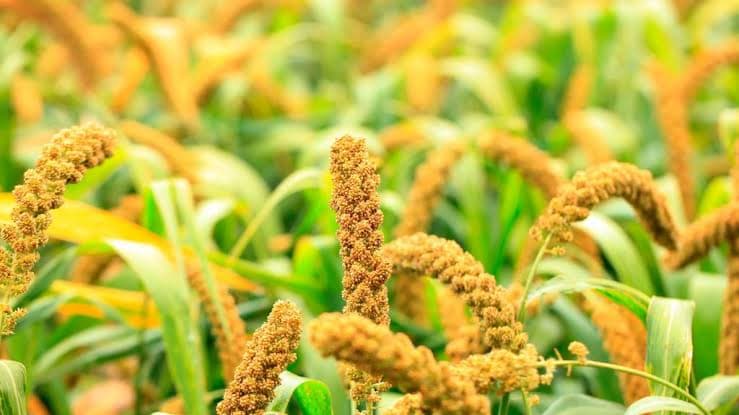
India's millet economy continues to expand on both the production and export fronts, according to the latest data released by the Department of Agriculture & Farmers Welfare and the Directorate General of Commercial Intelligence and Statistics (DGCIS). National output of Shree Anna, or Nutri Cereals, reached 18.59 million tonnes in 2024-25 as per the government's Final Estimate, cementing India's position as the world's largest producer of these grains. On the trade side, exports during 2025-26 have already touched 138.69 thousand MT, worth Rs. 543.40 crore, or roughly USD 61.57 million.
The numbers matter for a wide cross-section of the industry — from farmers deciding acreage allocation to processors scaling up capacity and exporters chasing new buyers. Millets, which include jowar, bajra, ragi, and a cluster of small millets such as foxtail, kodo, barnyard and proso, are increasingly positioned as India's answer to both a domestic nutrition challenge and a global demand shift toward gluten-free, low-glycemic-index grains. The production and trade data below offer a snapshot of where that positioning currently stands.
In this article (5 sections)
Production concentrated in a handful of states
The geography of India's millet production remains heavily concentrated. Rajasthan alone contributes 29.86% of national output in 2024-25, more than double the share of the second-largest producer, Maharashtra, at 13.62%. Karnataka (12.91%) and Uttar Pradesh (12.67%) follow closely behind, meaning that just four states account for close to 69% of the country's entire millet basket. Gujarat (7.25%) and Haryana (6.92%) form a second tier, while Madhya Pradesh (5.87%), Tamil Nadu (4.34%), Andhra Pradesh (2.25%) and Telangana (2.11%) make up the remainder of the top ten.
This concentration is not incidental — it reflects agro-climatic suitability, with millets thriving in the semi-arid, low-rainfall belts that characterise Rajasthan and much of western and southern India. For processors and aggregators, this means sourcing strategy cannot be geography-agnostic: supply chains built around Rajasthan and Maharashtra will behave very differently from those anchored in Uttar Pradesh or Gujarat, both in terms of harvest timing and logistics cost. It also means that any disruption in the top two or three states — whether from weather, input costs, or policy shifts such as changes to MSP support — carries outsized national impact, given how little the output is diversified beyond the leading producers.
Export volumes and values for 2025-26
On the trade ledger, India's millet exports for 2025-26 stand at 138.69 thousand MT, fetching Rs. 543.40 crore, or approximately USD 61.57 million, based on DGCIS data. Taken together, this works out to an average realisation of roughly Rs. 39,180 per tonne of exported millet, a useful benchmark for exporters and traders assessing whether their own contract pricing is in line with the broader market.
The scale of these figures should be read in the context of India's overall production base of 18.59 million tonnes — exports currently represent a modest fraction of total output, underscoring that the domestic market, not exports, remains the primary consumer of Indian millets for now. That said, the existence of a meaningful and quantifiable export channel signals that global buyers are actively sourcing Indian grain, and that the trade infrastructure — quality certification, processing, and logistics — is mature enough to support cross-border volumes running into the hundreds of thousands of tonnes. For exporters and processors evaluating capacity expansion, this is the clearest available signal of where incremental demand is likely to originate from outside India's borders. Details on processing support available to scale export-ready capacity are tracked on IndiaMillets' processing schemes page.
Where Indian millets are headed
The destination mix for 2025-26 exports is dominated by the Gulf and neighbouring markets. The UAE is the single largest buyer, taking 22.4% of India's millet exports, followed by Saudi Arabia at 12.7%. Together, these two markets account for over a third — 35.1% — of total export volumes, pointing to strong demand from Gulf economies with large expatriate Indian populations and growing health-food retail segments.
Beyond the Gulf, Nepal (7.8%) reflects India's traditional role as a food-grain supplier to its immediate neighbourhood, while the USA (6.7%) and Morocco (3.8%) round out the top five, indicating that Indian millets are also finding traction in Western wellness-food markets and in North Africa. For exporters, this distribution suggests that near-term growth opportunities are most likely to come from deepening penetration in existing top markets — particularly the UAE and Saudi Arabia — rather than from a broad, undifferentiated global push. Firms listed on IndiaMillets' suppliers directory serving these corridors are well placed to capture incremental demand as these five markets alone account for over 53% of current export volumes.
What this means for the industry
Read together, the production and export data point to an industry that is large in scale domestically but still early-stage in its export orientation. With production running at 18.59 million tonnes against exports of 138.69 thousand MT, the ratio makes clear that millets remain first and foremost a food-security and nutrition crop for India's own population, not primarily an export commodity. This has direct implications for how processors and investors should think about capacity: value-addition for the domestic market — flours, ready-to-cook mixes, and fortified foods — is likely to remain the larger opportunity in absolute volume terms, even as export revenue of Rs. 543.40 crore demonstrates a credible and growing international market exists in parallel.
For state-level policymakers, the heavy concentration of output in Rajasthan, Maharashtra, Karnataka and Uttar Pradesh suggests that infrastructure investment — warehousing, primary processing, and export logistics — targeted at these four states would yield the largest returns per rupee spent, simply because that is where the bulk of raw material originates. Meanwhile, for exporters, the destination data offers a clear market-development roadmap: strengthening ties with UAE and Saudi buyers, while testing incremental volumes into the USA and Morocco, appears more likely to compound export value than spreading effort thinly across untested geographies. Continued tracking of news coverage on trade and policy developments will be important as this sector matures.
Key numbers
| Metric | Figure |
|---|---|
| Total production (2024-25) | 18.59 million tonnes |
| Rajasthan's production share | 29.86% |
| Maharashtra's production share | 13.62% |
| Karnataka's production share | 12.91% |
| Export volume (2025-26) | 138.69 thousand MT |
| Export value (2025-26) | Rs. 543.40 crore / USD 61.57 million |
| UAE's export share | 22.4% |
| Saudi Arabia's export share | 12.7% |
Frequently asked questions
What counts as Shree Anna or Nutri Cereals in India's official data?
According to the Department of Agriculture & Farmers Welfare, Shree Anna/Nutri Cereals includes Sorghum (jowar), Pearl millet (bajra), Finger Millet (ragi), and small millets such as Banyard Millet, Proso Millet, Kodo Millet, Buckwheat, Amaranthus and Foxtail Millet.
Which state produces the most millets in India?
Rajasthan is the largest producer, contributing 29.86% of national output in 2024-25, followed by Maharashtra (13.62%), Karnataka (12.91%) and Uttar Pradesh (12.67%).
How much did India earn from millet exports in 2025-26?
India's millet exports in 2025-26 stood at 138.69 thousand MT in volume, valued at Rs. 543.40 crore, equivalent to approximately USD 61.57 million, based on DGCIS data.
Who are India's biggest millet export buyers?
The UAE is the largest destination at 22.4% of export volume, followed by Saudi Arabia (12.7%), Nepal (7.8%), the USA (6.7%) and Morocco (3.8%), per 2025-26 DGCIS figures.
References (2 sources)
- Department of Agriculture & Farmers Welfare — Final Estimate, 2024–25 — National and state-level millet (Shree Anna/Nutri Cereals) production figures.
- Directorate General of Commercial Intelligence and Statistics (DGCIS) — 2025–26 millet export volume, value, and destination-market figures.