Barnyard Millet (Sanwa) in India: Cultivation and Nutrition
The fastest-maturing cereal grown in India — cultivation from the northern plains to the Uttarakhand hills, nutrition, and its role as a fasting-day grain.
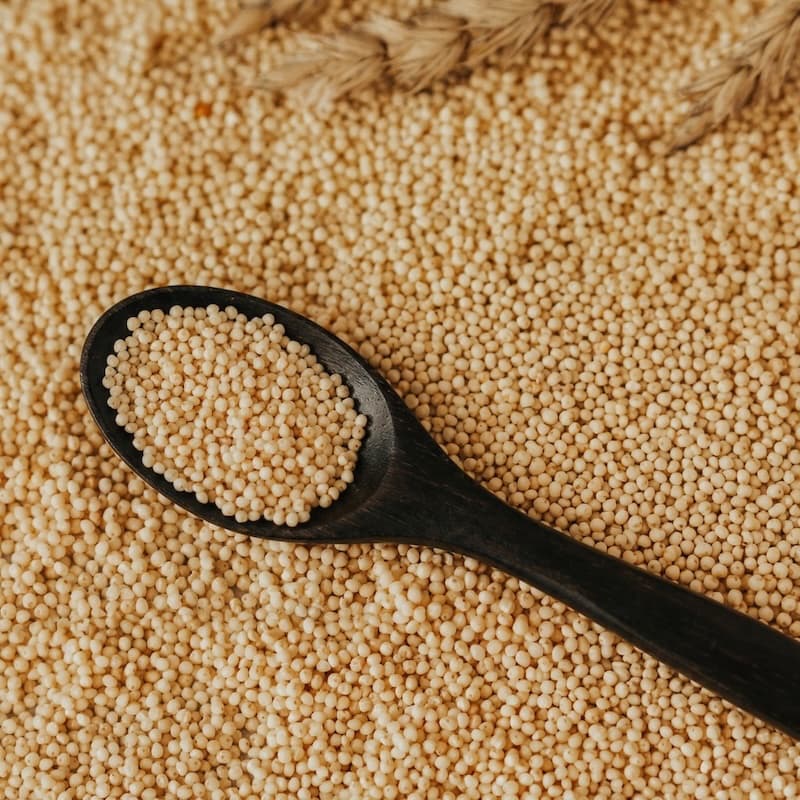
Barnyard millet matures faster than any other cereal grown in India — some varieties are ready to harvest in as little as six weeks — and holds a distinctive cultural role as the grain of choice during Hindu fasting periods, when regular cereals are avoided.
In this article (6 sections)
At a glance
| Metric | Figure |
|---|---|
| Botanical name | Echinochloa frumentacea |
| Local names | Sanwa / Jhangora (Hindi), Oodalu (Kannada), Kuthiraivali (Tamil) |
| Top producing states/regions | Uttar Pradesh, Haryana, Gujarat, Uttarakhand hills, Eastern Himalayas |
| Crop duration | As short as 6 weeks for some varieties |
| Energy | ~398 kcal / 100 g |
| Dietary fibre | ~12.6 g / 100 g |
Source: State agriculture department crop profiles (Uttar Pradesh, Uttarakhand); ICAR-IIMR (nutrition data).
Where it's grown
Barnyard millet is grown in the low-rainfall tracts of Uttar Pradesh, Haryana, and Gujarat, and separately at elevation across Uttarakhand's hill districts and the Eastern Himalayas, where it's known locally as jhangora and remains a staple hill-agriculture crop. This split — plains cultivation for the mainstream grain trade, hill cultivation as a traditional food-security crop — is fairly distinctive among India's minor millets.
Cultivation
Barnyard millet's headline trait is speed: some varieties mature in as little as six weeks, making it the fastest-cycling cereal grown anywhere in India. That speed makes it valuable as a catch crop between two main-season crops, or as a reliable option in short-window hill agriculture where the growing season is constrained by altitude and temperature.
Nutrition profile
Barnyard millet is calorie-dense relative to other millets (approximately 398 kcal per 100 g) and notably high in dietary fibre (around 12.6 g per 100 g), alongside roughly 10.5 g of protein and meaningful calcium and phosphorus content. Its fibre content and low glycaemic profile are the main reasons it's marketed as a diabetic-friendly and weight-management grain.
Processing and products
Barnyard millet is processed mainly into de-husked whole grain, sold widely under its "fasting grain" (vrat ka chawal or samvat ke chawal) positioning around Hindu fasting festivals, as well as into flour for flatbreads and porridge preparations. This seasonal fasting-day demand gives barnyard millet a distinctive, predictable demand pattern that differs from the steadier, year-round demand for staple millets like jowar or ragi.
Frequently asked questions
What is barnyard millet called in Indian languages?
Sanwa or Jhangora in Hindi, Oodalu in Kannada, and Kuthiraivali in Tamil.
Why is barnyard millet associated with fasting?
Because it's classified outside the regular grain category in Hindu dietary tradition, barnyard millet (as vrat ka chawal) is commonly eaten during religious fasting periods when rice, wheat, and other staple cereals are avoided.
How fast does barnyard millet mature?
Some varieties are ready for harvest in as little as six weeks — the fastest-maturing cereal cultivated in India.
References (2 sources)
- State agriculture department crop profiles (Uttar Pradesh, Uttarakhand) — Cultivation zones for plains and hill barnyard millet.
- ICAR-Indian Institute of Millets Research — Agronomy and nutrition context.
Continue reading