Jowar (Sorghum) in India: Production, MSP, and Processing
India's second-largest millet by production — where it's grown, the MSP for its two commercial types, and how it moves from field to bhakri.
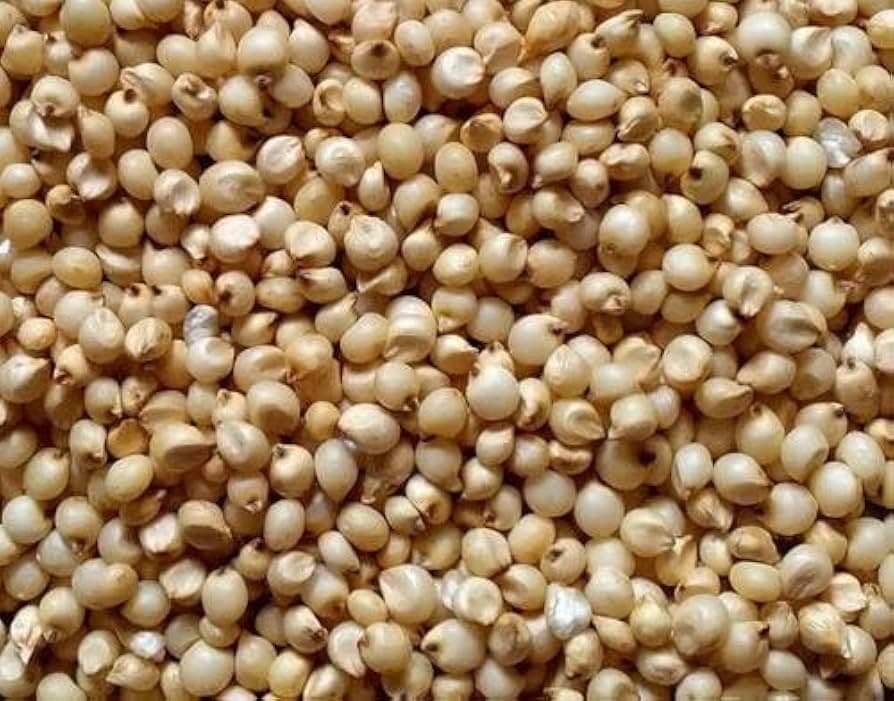
Jowar is India's second-largest millet by production after bajra, and the millet most associated with a single regional staple — the jowar bhakri and roti that anchor Maharashtra's and Karnataka's everyday diet. This page covers where jowar is grown, what it's worth to farmers, and how it moves into processed products.
In this article (7 sections)
At a glance
| Metric | Figure | Source |
|---|---|---|
| Botanical name | Sorghum bicolor | — |
| India production (2024–25) | 49.5 lakh tonnes | Directorate of Economics & Statistics |
| Top producing state | Maharashtra | Directorate of Economics & Statistics |
| MSP, hybrid jowar (KMS 2025–26) | ₹3,699 per quintal | PIB / Cabinet |
| MSP, Maldandi jowar (KMS 2025–26) | ₹3,749 per quintal | PIB / Cabinet |
| Crop duration | 100–120 days (variety-dependent) | ICAR-IIMR |
Source: Directorate of Economics & Statistics, Ministry of Agriculture & Farmers Welfare (production, 2024–25); PIB / Cabinet Committee on Economic Affairs (MSP, KMS 2025–26); ICAR-IIMR (crop duration).
Jowar's MSP is set separately for its two major commercial types — hybrid jowar and the traditional Maldandi variety, grown mainly in Maharashtra and Karnataka — reflecting how differently the two are traded. Both received a near-double-digit percentage increase for the 2025–26 kharif marketing season, alongside ragi one of the largest hikes among the fourteen MSP-notified kharif crops that year.
Where jowar is grown
Maharashtra is India's largest jowar producer, followed by Karnataka, and then Telangana and Andhra Pradesh — together the Deccan plateau accounts for the large majority of national output. The crop suits the region's moderate-to-low rainfall and black cotton soils, and is grown in both the kharif (monsoon) and rabi (post-monsoon, residual-moisture) seasons — one of the few Indian cereals cultivated significantly in both. Rabi jowar, sown after the monsoon on stored soil moisture, is a Maharashtra speciality and generally commands a premium for its firmer grain and better roti/bhakri quality.
Cultivation
Jowar is a C4 cereal, tolerant of drought and heat, and — like the other millets — well suited to marginal land where rice and wheat struggle. Duration varies by type and season: kharif hybrids mature faster (roughly 100–110 days) while rabi Maldandi varieties run longer. It is grown both as a grain crop and, particularly in its early growth stages or as a dedicated fodder variety, as green fodder for livestock — jowar's dual grain-and-fodder role is one reason it remains a default choice for mixed farming households across the Deccan.
Nutrition profile
Jowar is naturally gluten-free and a reasonable source of protein and dietary fibre relative to refined wheat and rice, with a lower glycaemic response than polished rice. It's also a source of antioxidant compounds (notably in pigmented/red-grain varieties) that have drawn research interest independent of its macronutrient profile.
Processing and products
The dominant processed form is flour, milled fresh at the household or local-mill level for roti/bhakri in Maharashtra and Karnataka, and increasingly packaged for urban retail. Beyond flour, jowar is processed into flakes (poha-style), malted for health-drink bases, and used in extruded snack formats — a category that has drawn recent commercial interest as brands expand millet-based snacking lines. Primary processing (cleaning, de-husking, grading) uses the same equipment classes as the other major millets; see the de-husking equipment buyer's guide for de-husker and grader comparisons.
Government support
Jowar-based products are eligible under the PLI Scheme for Millet-Based Products (PLISMBP) where they meet the scheme's minimum millet-content thresholds, and processing units can draw on the PMFME credit-linked subsidy for smaller-scale setup or upgrades. See the schemes tracker for current eligibility and deadlines.
Frequently asked questions
What is jowar called in English?
Sorghum. The botanical name is Sorghum bicolor.
Which state produces the most jowar in India?
Maharashtra is India's largest jowar producer, followed by Karnataka.
What is the MSP for jowar in 2025–26?
₹3,699 per quintal for hybrid jowar and ₹3,749 per quintal for the Maldandi variety, for Kharif Marketing Season 2025–26.
Is jowar gluten-free?
Yes, jowar is naturally gluten-free.
Is jowar grown in more than one season?
Yes — jowar is unusual among Indian cereals in being grown in both the kharif and rabi seasons, with rabi (Maldandi) jowar a Maharashtra speciality valued for bhakri-making.
References (3 sources)
- Directorate of Economics and Statistics, Ministry of Agriculture & Farmers Welfare — Jowar production and state-level distribution, 2024–25.
- PIB / Cabinet Committee on Economic Affairs — MSP announcements for hybrid and Maldandi jowar, Kharif Marketing Season 2025–26.
- ICAR-Indian Institute of Millets Research — Agronomy, crop duration, and nutrition context.
Continue reading
Crop reference
Bajra — India's largest millet
Production geography, MSP, varieties, and the value-added economy.
Crop reference
Ragi — India's most calcium-dense cereal
Where it's grown, nutrition, MSP, and processing.
Reference table
MSP reference — all 9 millets
Annual MSP table covering bajra, jowar, ragi, and the minor millets.