Bajra (Pearl Millet) in India: Production, Markets, Processing
The reference for India's largest millet — production geography, varietal selection, MSP context, the processing economy bajra anchors, and the export markets that take India's surplus.
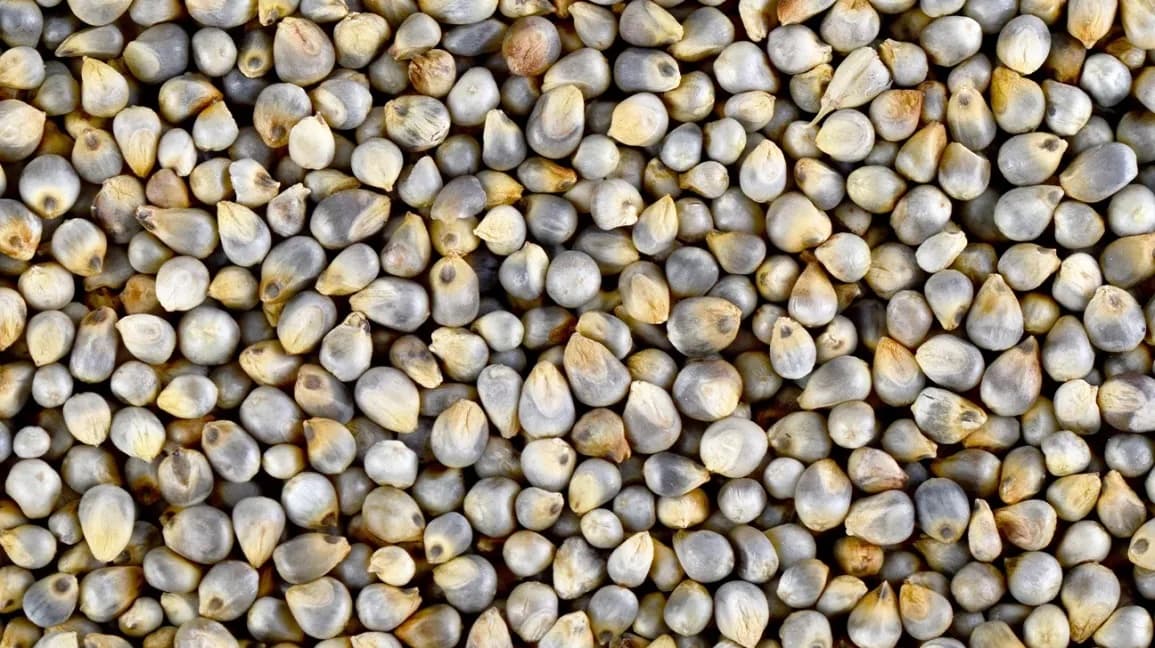
Bajra is India's largest millet by volume. McDonald's India's CSIR-CFTRI Multi-Millet Bun (November 2025) lists bajra among five millets; PepsiCo's Kurkure Jowar Puffs sits alongside bajra extruded snacks now appearing across regional brands. This page is the B2B reference for bajra.
Behind those launches is a B2B supply chain most outside the industry never see — hundreds of de-husking units in western Rajasthan, flour mills along the Haryana–Rajasthan corridor, value-added manufacturers in Gujarat and Maharashtra, and PLISMBP-approved entities scaling RTE/RTC products for domestic and export shelves. This page covers production geography, varietal selection, MSP and procurement context, the processing economy bajra anchors, and the export markets that take India's surplus.
In this article (11 sections)
- At a glance
- What bajra is, and what to call it
- Varieties and what they mean for buyers
- Production geography: states and districts
- From farm to processor: the bajra supply chain
- The bajra processing economy
- Bajra in export markets
- Bajra MSP — context, not coverage
- Quality, nutrition, and certifications
- Outlook 2026
- Frequently asked questions
At a glance
| Metric | Latest figure | Source |
|---|---|---|
| India bajra production (FY25, advance estimate) | ~94 lakh tonnes (component of 18.01 million MT total millet output) | Ministry of Agriculture / DES |
| Top producing state (FY24 actuals) | Rajasthan, ~43.84 lakh tonnes (≈45% of national) | Ministry of Agriculture / DES |
| Top producing district cluster | Western Rajasthan (Barmer, Nagaur, Jodhpur, Jalore, Pali) | Rajasthan Agricultural Competitiveness Project |
| MSP (Kharif Marketing Season 2025–26) | ₹2,775 per quintal (+₹150 / +6.1% vs 2024–25) | Cabinet / PIB |
| Margin over cost (CACP-estimated, KMS 2025–26) | ~63% — the highest among all 14 kharif crops | CACP / PIB |
| Primary HS code (export) | 1008 29 20 (machine-cleaned bajra grain) | Indian Customs / DGFT |
| Export destinations (FY24 trade) | 66 countries; top 3 — USA, UAE, Australia (~63% by volume) | APEDA / DGCIS |
Source: Ministry of Agriculture / Directorate of Economics and Statistics; APEDA; CACP / PIB; Indian Customs. FY25 advance estimates where applicable; FY24 actuals otherwise.
Latest verified actual data is FY24; FY25 figures referenced where available are advance estimates from Ministry of Agriculture.
The full MSP comparison across all nine millets lives at /millets/msp. This page focuses on bajra in B2B context.
What bajra is, and what to call it
Pennisetum glaucum — pearl millet, bajra in Hindi (बाजरा), and a remarkable diversity of regional names that matter when you're sourcing across states. Sajje in Karnataka, kambu in Tamil Nadu, sajjalu in Andhra Pradesh and Telangana, bajri in Gujarat and Maharashtra, sajja in Odisha, cumbu in some Tamil-speaking trade contexts. The name a buyer or supplier uses is a faster geography signal than a postal pin code: "we trade in bajri" almost certainly means a Gujarat or Maharashtra supplier.
Bajra is a C4 cereal adapted to arid and semi-arid conditions. Compared with rice and wheat it is more drought-tolerant, more tolerant of poor soils, and faster to mature — modern hybrids harvest in 60–80 days. It is the cereal that grows where wheat and rice cannot, which is why its production map is dominated by Rajasthan, Haryana, and the drier districts of Gujarat, Uttar Pradesh, and Madhya Pradesh.
For procurement teams, three quality dimensions matter beyond raw weight: protein content (typically 11–13% in food-grade lots), iron content (which varies by variety and is the basis for ICRISAT's biofortified releases), and the degree of broken/foreign matter post-cleaning (which determines downstream processing yield). FSSAI's 2023 Group Standard for Millets — codified under the Food Safety and Standards (Food Products Standards and Food Additives) Second Amendment Regulations, 2023 — fixes maximum limits across eight quality parameters: moisture, uric acid, extraneous matter, other edible grains, defects, weevilled grains, and immature/shrivelled grains. Suppliers handling FSSAI-licensed flow are working to those parameters whether or not they say so on a packing slip.
Varieties and what they mean for buyers
Bajra cultivation in India is dominated by hybrids; open-pollinated varieties (OPVs) and landraces matter mostly in tribal-belt and organic supply chains. Variety selection is not just an agronomic decision — it determines maturity window (and therefore market timing), grain size and bulk density (which affect milling and packaging), and increasingly the iron content (for buyers targeting biofortified-product claims).
| Variety class | Notable releases | Maturity (days) | Average yield (q/ha) | Typical region |
|---|---|---|---|---|
| Early hybrids | HHB-67 Improved, HHB-94, HHB-146 | 60–65 | 8–10 (rainfed); up to 30 (irrigated) | Rajasthan, Haryana — drought-prone districts |
| Medium hybrids | RHB-173, HHB-272, GHB-558 | 75–85 | 25–35 | Rajasthan, Gujarat, MP |
| Biofortified releases | Dhanashakti (biofortified OPV, +Fe), AHB-1200Fe (biofortified hybrid, +Fe) | 70–80 | 22–28 | All major states; ICRISAT release pipeline |
| OPVs / public-bred | ICTP 8203, RCB-IC-911 | 75–90 | 18–25 | Tribal belts, organic farming, seed savers |
| Landraces (deshi) | Regional unselected | 90+ | 12–18 | Western Rajasthan, parts of Gujarat |
Source: ICAR-IIMR variety bulletins; AICPMIP annual reports; CCS HAU and ICRISAT release notes.
HHB-67 Improved is the workhorse — released and notified for general cultivation in 1990, its 60–62-day maturity and drought tolerance made it the variety planted on more than 500,000 ha across Haryana and Rajasthan within a decade. The "Improved" version, developed jointly by CCS HAU Hisar and ICRISAT, addresses downy mildew resistance issues in the original. RHB-173, recommended for Rajasthan kharif, has reported ICAR trial yields in the 3,000–3,500 kg/ha range — well above farm averages, which sit closer to 1,000 kg/ha rainfed and up to 2,500–3,000 kg/ha irrigated.
For buyers sourcing for value-added processing, the practical question is uniformity across lots: hybrid-dominant supply means tighter test-weight and milling-yield consistency than landrace-heavy supply. For organic buyers and brands building "heirloom" or "indigenous variety" SKUs, the OPV and landrace channels — which run mainly through FPOs in tribal belts — matter more than the hybrid mainline.
Production geography: states and districts
India produced approximately 18.01 million tonnes of millets across all nine varieties in FY25, of which bajra accounts for roughly half. The state-level distribution is concentrated:
| Rank | State | FY24 production (lakh tonnes) | Share of national |
|---|---|---|---|
| 1 | Rajasthan | 43.84 | ~45% |
| 2 | Uttar Pradesh | 20.46 | ~21% |
| 3 | Gujarat | 13.04 | ~13% |
| 4 | Haryana | 11.37 | ~12% |
| 5 | Madhya Pradesh | 8.32 | ~9% |
| 6 | Tamil Nadu | 2.38 | ~2% |
| 7 | Telangana | 0.17 | <1% |
Source: Ministry of Agriculture / Directorate of Economics and Statistics. FY24 production data.
Rajasthan's dominance is structural: roughly 30–60% of cropped area in the western and central districts is under bajra, and the state's arid-zone agroclimate makes it the only viable kharif cereal at scale across much of the geography. The leading bajra-producing districts within Rajasthan, in approximate order, are:
- Barmer — among the largest absolute producers; arid, high-bajra-share cropping.
- Nagaur — high acreage, well-developed mandi infrastructure.
- Jalore — strong arid-zone production.
- Jodhpur — large producer plus a major mandi node for western Rajasthan trade.
- Pali — significant acreage and processing.
- Sikar — central-state production.
- Churu — northern arid zone.
- Ganganagar — irrigated belt; higher per-hectare yields than rainfed districts.
- Hanumangarh — irrigated, often higher productivity.
- Bikaner — large area, lower yields, but high absolute output.
Outside Rajasthan, the procurement geography splits into clear clusters: Haryana's Hisar, Bhiwani, Mahendragarh, Rewari, and Jhajjar form the second-largest production cluster (with strong APMC mandi infrastructure that posts daily rates); Gujarat's Banaskantha, Mehsana, and Patan dominate that state's output; Uttar Pradesh's Mathura, Aligarh, Etah, and Agra districts round out the eastern-most major production belt.
For buyers, the practical implication is that physical proximity to processing infrastructure is highly uneven. Western Rajasthan has primary processing capacity but limited value-added manufacturing. Haryana has both — and is therefore overrepresented in the supplier pools serving large branded-products customers. Gujarat (Banaskantha-Mehsana-Patan) has emerging value-added manufacturing capacity tied to the dairy and snack ecosystems.
From farm to processor: the bajra supply chain
The bajra supply chain in India runs along five legs, each with distinctive geography and economics:
- Farm to FPO / aggregator. In Rajasthan and Haryana, FPOs and private aggregators consolidate the harvest in October–November. In tribal-belt micro-production (parts of MP and Gujarat), this leg is replaced by direct procurement by NGOs, processors, and FPO collectives.
- FPO / aggregator to APMC mandi. Major bajra states have active APMCs — Hisar, Bhiwani, Najafgarh (Delhi-region trade), Banaskantha mandis, Mathura — where daily arrivals and rates are posted. Mandi-level price discovery is real for bajra (unlike for several minor millets which move primarily off-market).
- Mandi to primary processor. Primary processing — cleaning, de-husking, grading, optional polishing — concentrates around the mandi clusters. Capacity is fragmented across hundreds of small units (₹2–10 lakh capex range) plus a smaller number of integrated units (₹35 lakh–2 crore).
- Primary processor to value-added manufacturer or exporter. Cleaned and graded bajra is sold as grain (for export and bulk B2B), milled to atta (the largest single product category by volume), or moved into specialty processing — flakes, extruded snacks, biscuits and cookies, noodles and pasta, RTE/RTC products.
- Value-added manufacturer to retail / HoReCa / export. This is where brand-side activity has been densest in 2025–26, with mainstream consumer brands and the PLISMBP cohort scaling output.
The procurement-side advantage for buyers willing to source closer to leg 1 — direct from FPOs or primary processors — is meaningful: by industry-analyst and FPO-collective accounts, middleman markups along this chain can compress 15–25% of a buyer's landed cost when the procurement is structured to skip APMC and trader layers. The trade-off is verification: FPOs and small primary processors carry less compliance documentation, which raises the buyer's burden of FSSAI/quality verification.
The bajra processing economy
This is the section that connects bajra-as-crop to bajra-as-business, and it is where the most useful original analysis sits.
Primary processing
Bajra has a harder husk than most minor millets, and primary processing equipment must be specified accordingly. The core machine list for a primary unit is consistent across capacity tiers:
- Cleaner / pre-cleaner — removes dust, chaff, and oversize impurities at intake.
- Destoner — removes stones and dense impurities; critical for bajra given field-side gathering practices.
- Grader — separates by size, often configured for two-pass operation.
- De-husker / dehuller — the bottleneck machine; bajra requires more aggressive de-husking than ragi or kodo, and double-stage units (e.g., from Perfura, Coimbatore) are common in mid-tier installations.
- Polisher (optional) — used by units producing semi-polished grain for retail.
- Aspirator — final cleaning pass; often integrated as part of destoner-cum-grader-cum-aspirator combined units (common from Nabhitha Engineering, Rangareddy).
Capex bands for primary bajra processing units, with current 2026 vendor-quote ranges:
| Capacity tier | Throughput | Indicative capex | Typical buyer |
|---|---|---|---|
| Village / community | ~50–100 kg/hr | ₹2–5 lakh | FPOs, NGO-supported units, on-farm processors |
| Small commercial | 100–250 kg/hr | ₹8–20 lakh | Independent processors, contract milling for FPOs |
| Mid commercial | 250–1,000 kg/hr | ₹35–70 lakh | Integrated grain processors, regional brands |
| Industrial | 1,000+ kg/hr | ₹2 crore+ | Large value-added manufacturers, exporters |
Source: IndiaMillets vendor-quote survey, 2026. Capex bands indicative; vendor quotes vary by spec and location.
A detailed de-husker comparison is at the De-Husking Equipment Buyer's Guide; destoner-grader-aspirator and end-to-end line config guides are planned additions.
Value-added manufacturing
This is the higher-margin leg of the chain and the one where PLISMBP incentives, mainstream brand activity, and the most active B2B sourcing demand all converge.
Bajra atta is produced by national organic-food brands and a long tail of regional flour mills and private-label suppliers. Specialty manufacturers operate in flakes (concentrated in Maharashtra and Karnataka), extruded snacks (a PLISMBP-eligible cluster), biscuits and cookies (Gujarat, Tamil Nadu, Karnataka, NCR), and noodles/pasta (Coimbatore–Bengaluru–Madurai–Erode cluster). The IndiaMillets directory will list verified bajra value-added manufacturers as listings are onboarded; PLISMBP-approved entities will carry a distinct verification badge.
Major bajra-anchored product categories:
- Bajra atta (flour) — the largest single value-added category by volume; produced across national organic-food brands, regional chakki and roller-flour mills, and private-label suppliers serving HoReCa and modern trade.
- Bajra extruded snacks — fast-growing post-2024 with several PLISMBP-eligible product launches. Extrusion units typically sit at the ₹50 lakh – 2 crore capex tier and have proven the most attractive PLISMBP application target.
- Bajra biscuits and cookies — growing private-label B2B demand, including bajra-jaggery and bajra-multigrain SKUs. Private-label cookie manufacturing infrastructure exists in Gujarat (Rajkot), Tamil Nadu (Coimbatore), Karnataka (Bengaluru), and the NCR.
- Bajra noodles and pasta — manufacturing is concentrated in the Coimbatore–Bengaluru–Madurai–Erode corridor. PLISMBP-eligible by virtue of the ≥10% millet content threshold for pasta/noodle products.
- Bajra flakes (poha) — specialty category with manufacturing concentrated in Maharashtra and Karnataka. Pricing typically ₹75–90/kg in 18 kg bulk packs.
- Bajra-incorporated RTE/RTC products — the PLISMBP scheme's central focus, including breakfast cereals (≥25% individual millet incorporation per scheme rules), bakery products (the McDonald's CFTRI-developed bun lists bajra among five millets at 22% total millet content), and other RTE formats.
Industry estimates place gross margins on millet flour SKUs in the 30–50% range, with premium and health-mix SKUs reaching higher tiers.
PLISMBP and bajra
The Production Linked Incentive Scheme for Millet-Based Products has a total outlay of ₹4,600 crore (₹2,900 crore earmarked specifically for millet-based products). In its first tranche, ₹793 crore has been approved across 29 entities — 8 large entities and 21 SMEs — under the scheme's eligibility framework, which requires a minimum 15% millet content by weight or volume in branded RTE/RTC products and an annual sales-growth threshold of ≥10% YoY over the base year.
Bajra figures in PLISMBP-eligible products across multiple categories: breakfast cereals (with a 25% individual-millet floor for cereal SKUs), pasta and noodles (10% individual-millet floor), and RTE/RTC products (20% individual-millet floor). The detailed company-by-company list of PLISMBP-approved beneficiaries, with bajra-specific product lines flagged, is not yet fully publicly catalogued by MoFPI; verified cross-referencing against MoFPI's published announcements is the only reliable basis for the "PLISMBP-Beneficiary" verification badge that this platform extends. The IndiaMillets directory will list verified PLISMBP-approved entities with their bajra-incorporated products as soon as MoFPI's per-entity disclosures permit accurate attribution.
Browse value-added manufacturers in the directory → · Read the full PLISMBP scheme walkthrough →
Bajra in export markets
India's millet exports totalled approximately 1.21 lakh tonnes for USD 59.23 million in FY25, going to 139 destination countries. Bajra-specific export data, drawn from DGCIS records and APEDA cereals reports, shows a more concentrated picture:
- For the trade window March 2023–February 2024, India exported bajra to 66 countries.
- The top three destinations — the United States, United Arab Emirates, and Australia — accounted for approximately 63% of total bajra export volume.
- Other significant destinations: Saudi Arabia, Algeria (notable growth in recent years), Germany (rising European demand), Nepal, Yemen, Tunisia, Pakistan, Namibia.
- Bajra exports under HS 1008 20 (millet seed) generated approximately USD 38.09 million in 2024, with bajra showing an 11.15% growth rate despite a volume correction.
The HS code structure relevant for bajra export documentation:
| HS code | Description | Use case |
|---|---|---|
| 1008 | Buckwheat, millet and canary seed; other cereals (heading) | Documentation reference |
| 1008 20 | Millet, seed | Retained for general millet trade |
| 1008 29 20 | Bajra (Indian pearl millet), machine cleaned | Standard bajra grain export |
| 1102 90 90 | Other cereal flours (used for pearl-millet flour) | Bajra atta exports |
Source: Indian Customs HS schedule; DGCIS trade statistics.
For exporters, the documentation chain is: APEDA registration (mandatory for exports of Schedule-2 agricultural products including millets), FSSAI license (Central license required for export entities), GST registration, and where applicable organic certifications (India Organic / NPOP for India, USDA NOP for US, EU organic regulation 2018/848 for European destinations, JAS for Japan). Country-pair documentation for individual buyer markets — UAE, Saudi Arabia, USA, Germany, Nepal — is a planned addition; the sourcing guide for international buyers covers the general documentation chain in the meantime.
Bajra MSP — context, not coverage
The Minimum Support Price for bajra for Kharif Marketing Season 2025–26 is ₹2,775 per quintal, an increase of ₹150 over the prior year (+6.1%). Bajra's MSP-margin over the CACP-estimated cost of production sits at approximately 63% — the highest among all 14 kharif crops, reflecting the government's policy emphasis on nutri-cereals and on supporting cultivation in arid-zone districts where alternatives are limited.
State-level procurement varies. Gujarat began direct MSP procurement of paddy, bajra, jowar, maize, and ragi in November 2025. Haryana and Rajasthan operate procurement through state agencies during the kharif marketing window. Uttar Pradesh has periodic procurement under the National Food Security Mission allocations. For procurement teams, the practical takeaway is that mandi prices in major bajra states track close to MSP during the procurement window and trade above MSP off-season; the /millets/msp reference page covers the full multi-year MSP series across all nine millets.
Quality, nutrition, and certifications
FSSAI's Group Standard for Millets, in force since September 2023 under the Food Safety and Standards (Food Products Standards and Food Additives) Second Amendment Regulations, 2023, fixes maximum limits across eight quality parameters for all millets including bajra: moisture content, uric acid content, extraneous matter, other edible grains, defects, weevilled grains, and immature/shrivelled grains. Suppliers serving branded-products customers and exporters work to these parameters as a baseline; lots that fail Group-Standard testing are diverted to feed or non-food channels.
Nutritional context relevant for B2B buyers (whole-grain bajra, typical food-grade lot):
- Protein: 11–13% (compares favourably to rice at 7% and wheat at 11–12%).
- Iron: 6–8 mg / 100 g in standard varieties; 8–11 mg / 100 g in biofortified releases (Dhanashakti, AHB-1200Fe). Iron bioavailability is notably higher in bajra than in fortified wheat flour.
- Calcium, magnesium, phosphorus: meaningful contributors at typical serving sizes.
- Glycaemic index: typically ranked in the low-to-moderate band; relevant claim basis for diabetic-friendly product positioning.
Certifications that move B2B sales:
- FSSAI — license tier depends on production capacity. Petty manufacturers (≤100 kg/day) require FSSAI Registration only (₹100/year). State licenses cover units up to 1 MT/day (₹3,000/year) and larger non-milling units (₹5,000/year). Central licenses are required for export and for non-milling units above the state-license threshold. The detailed FSSAI registration walkthrough covers the FoSCoS portal flow and millet-specific user manual.
- APEDA — mandatory for export. RCMC (Registration-Cum-Membership Certificate) is the operative document.
- Organic — India Organic / NPOP for the Indian market and exports to several destinations; USDA NOP for the US; EU 2018/848 for European destinations; JAS for Japan. NPOP-certified bajra is the basis for premium-priced exports to high-margin markets.
- ISO 22000:2018 — increasingly requested by international buyers as a process-side quality signal beyond product-level FSSAI compliance.
Outlook 2026
Three concurrent forces shape the bajra opportunity in 2026 and 2027:
Brand-side mainstreaming. McDonald's India launched its CSIR-CFTRI-developed Multi-Millet Bun in November 2025, with bajra one of five millets in the formulation. PepsiCo entered the millet-snacks segment in September 2025 with Kurkure Jowar Puffs — a jowar-anchored launch but one that opens shelf space for bajra-anchored variants from incumbents. HETC Foods launched Navdhan's sprouted millet powders in December 2025. Millets Now, a Sambhajinagar-based startup, won the FAO Startup Innovation Award 2025 in October 2025 — selected from over 1,500 startups across 102 countries. These signals are real, and they pull demand into the value-added processing tier where margins — industry estimates place gross margins on millet flour SKUs in the 30–50% range, with premium and health-mix SKUs reaching higher tiers — make new entrants viable.
Government tailwind. PLISMBP's first-tranche ₹793 crore approval, the Shree Anna Mission's ₹600 crore allocation in the Union Budget 2025–26, the PMFME credit-linked subsidy (35% of project cost up to ₹10 lakh for individual micro-enterprises), and ODOP-aligned district priorities together constitute the most active government support window the sector has had. The /processing/schemes tracker tracks deadlines and eligibility across these.
Honest caveats. The "Year of Millets" tailwind that began with India's IYoM 2023 push has been carrying the sector for three years; some of the brand-side activity is rhetorical positioning rather than committed shelf space. PLISMBP's 10% YoY sales-growth requirement is a binding constraint that will test some of the 29 approved entities. International export volumes corrected in 2024 even as values grew, indicating price-led rather than volume-led growth. Procurement teams and entrepreneurs entering the sector should size their bets against scenario-2 outcomes (tailwind moderates; serious entrants persist; speculative entrants exit) rather than scenario-1 outcomes (tailwind compounds at IYoM-2023 rates).
Frequently asked questions
What is bajra called in different Indian states?
Bajra in Hindi-speaking states; sajje in Karnataka; kambu in Tamil Nadu; sajjalu in Andhra Pradesh and Telangana; bajri in Gujarat, Maharashtra, and parts of Rajasthan; sajja in Odisha. The English name is pearl millet; the scientific name is Pennisetum glaucum.
Which states produce the most bajra in India?
Rajasthan leads with approximately 43.84 lakh tonnes (FY24), about 45% of the national total. Uttar Pradesh, Gujarat, Haryana, and Madhya Pradesh follow. Within Rajasthan, the leading districts are Barmer, Nagaur, Jalore, Jodhpur, Pali, Sikar, Churu, Ganganagar, Hanumangarh, and Bikaner.
What is the MSP for bajra in 2025–26?
₹2,775 per quintal, set by the Cabinet Committee on Economic Affairs for Kharif Marketing Season 2025–26. This represents a ₹150 / 6.1% increase over the prior year and a ~63% margin over the CACP-estimated cost of production — the highest among all 14 kharif crops.
Which Indian companies are major bajra processors?
Major bajra atta production is dominated by national organic-food brands and a long tail of regional flour mills. The IndiaMillets directory lists verified bajra processors and value-added manufacturers — including PLISMBP-approved entities, which carry a separate verification badge — as the directory onboards. Browse verified bajra processors →
Which countries import bajra from India?
For FY24 trade (Mar 2023 to Feb 2024), India exported bajra to 66 countries. The top three destinations — the United States, the United Arab Emirates, and Australia — accounted for approximately 63% of bajra export volume. Saudi Arabia, Algeria, Germany, Nepal, Yemen, Tunisia, Pakistan, and Namibia are other significant destinations.
What is the FSSAI license requirement for bajra processing?
FSSAI Registration (₹100/year) covers petty manufacturers up to 100 kg/day. State licenses cover milling units up to 1 MT/day (₹3,000/year) and non-milling units above that threshold (₹5,000/year). Central licenses are required for exports and for larger non-milling units. The FSSAI Group Standard for Millets, in force since September 2023, applies to all bajra products and fixes limits across eight quality parameters.
Is bajra eligible under the PLISMBP scheme?
Yes. The PLI Scheme for Millet-Based Products covers RTE/RTC products with a minimum 15% millet content (with category-specific floors: 25% for breakfast cereals, 10% for pasta/noodles, 20% for other RTE/RTC products). Bajra-incorporated products in any of these categories are eligible, subject to the scheme's annual sales-growth requirement of ≥10% YoY over the base year.
References (7 sources)
- Ministry of Agriculture / Directorate of Economics and Statistics — Bajra acreage, production, and yield series at national, state, and district levels. FY24 actuals; FY25 advance estimates.
- APEDA Cereals Reports — Bajra export trade by destination country, HS-code-level data, and APEDA-registered exporter rosters.
- ICAR-IIMR variety bulletins and AICPMIP annual reports — Varietal data — release year, maturity period, trial yield, regional recommendation — for hybrid, OPV, biofortified, and landrace bajra.
- PIB releases — MSP announcements (KMS 2025–26), PLISMBP scheme tranches and approvals, Shree Anna Mission allocations.
- FSSAI Group Standard for Millets, 2023 — Eight quality parameters governing all millet products including bajra, in force from September 2023 under FSS Regulations 2023.
- MoFPI PLISMBP scheme documentation — Per-category millet-content thresholds (15% / 25% / 10% / 20%), sales-growth requirements, and beneficiary lists.
- CSIR-CFTRI / McDonald's India press materials — Multi-Millet Bun composition (November 2025) — bajra share among the five-millet formulation.
Continue reading
Scheme walkthrough
PLISMBP — eligibility, application, approval
₹800 cr standalone scheme; 30 approved (29 active); ₹793 cr approved, ₹26.57 cr disbursed (March 2025).
Scheme walkthrough
PMFME credit-linked subsidy
Up to ₹10 lakh subsidy (35% of project cost) for individual micro-enterprises. ODOP-aligned districts get priority.
Reference table
MSP reference 2026 — all 9 millets
Annual MSP table covering bajra, jowar, ragi, and the minor millets. KMS 2025–26 figures with margin-over-cost.