PLI Scheme for Millet-Based Products (PLISMBP): A 2026 Reference for India's Millet Processors
Reference for the PLI Scheme for Millet-Based Products — a ₹800 cr standalone scheme; 30 approved entities (29 active); ₹793 cr approved vs ₹26.57 cr disbursed as of March 2025; no investment threshold.
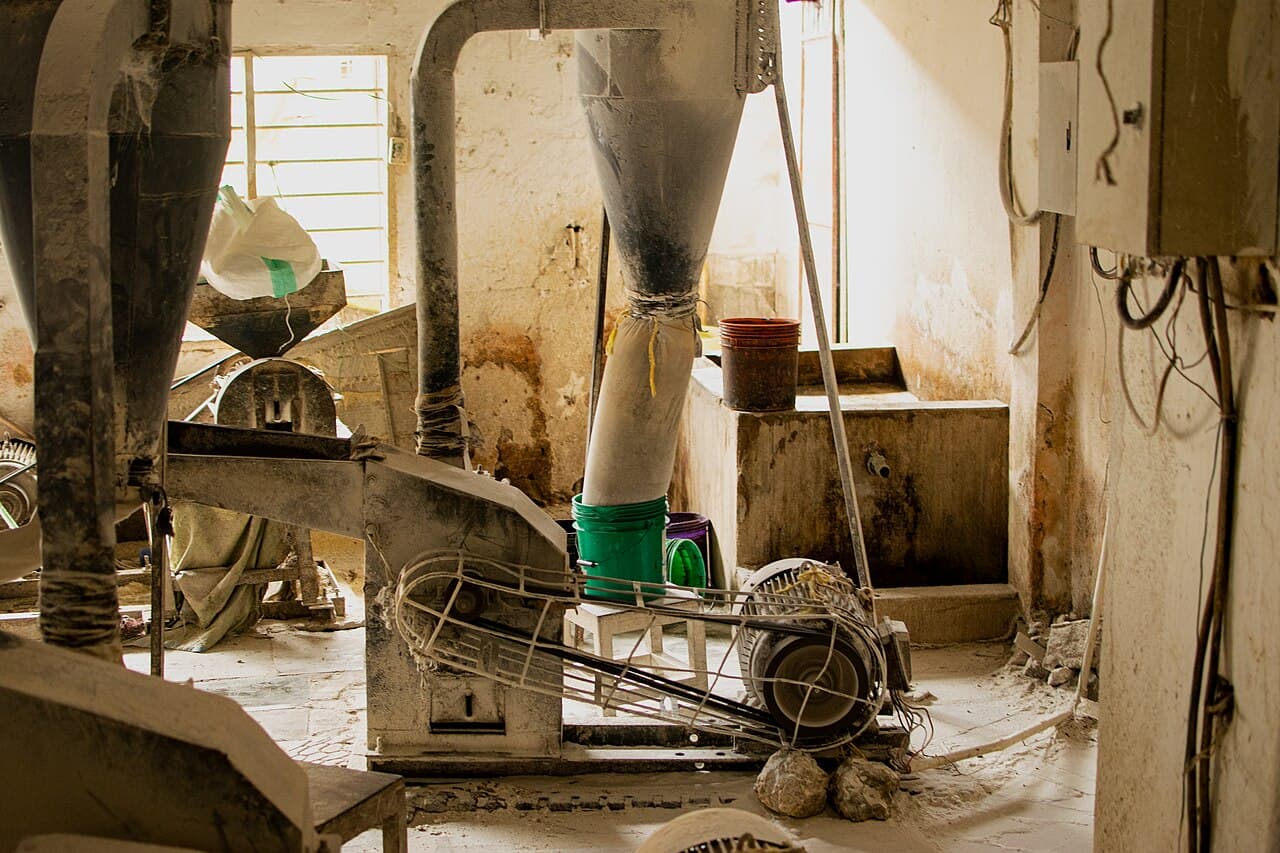
The Production Linked Incentive Scheme for Millet-Based Products — PLISMBP in shorthand — is the most consequential central-government scheme for branded millet products in India. It is a standalone ₹800 crore PLI scheme dedicated entirely to millet-based products, notified by the Ministry of Food Processing Industries on 23 June 2022. The scheme was carved out separately from the broader PLI Scheme for Food Processing Industry (PLISFPI), funded from PLISFPI savings, and it operates with its own guidelines, its own eligibility floors, and — critically — without any minimum capital-investment requirement.
This page is the reference for entrepreneurs, food-processing companies, and consultants who need to know: who can apply, what qualifies, what the rates and caps are, who is on the approved list, how much has actually been disbursed, and how the scheme compares with PMFME and Shree Anna Mission. The figures, eligibility thresholds, content rules, incentive rates, application flow, and approved-entity list on this page are sourced from MoFPI's primary documents — the PLISMBP operational guidelines dated 23 June 2022 (F. No. 11-18/1/2022-PLIS, signed by Atul Saxena, Joint Secretary), the Round Two approval announcement, the Rajya Sabha Unstarred Question No. 3910 dated 4 April 2025, and PIB releases on the cohort's operational performance.
In this article (16 sections)
- At a glance
- What PLISMBP is, and where it sits
- Eligibility — who can apply, who's excluded
- Eligible product categories and millet content
- Incentive structure — how the money flows
- Application process step-by-step
- Compliance, monitoring, and the 10% CAGR requirement
- The 30 approved beneficiaries — Round Two cohort
- Common pain points and rejection reasons
- PLISMBP versus PMFME — when each fits
- Where PLISMBP fits, and where PMFME or Shree Anna may suit better
- Technical Committee on Millet Based Food Products
- Outlook 2026–27
- Frequently asked questions
- References
- Metadata for article-page-data.ts (port to route wiring at publish time)
At a glance
| Metric | Figure | Source |
|---|---|---|
| Total scheme outlay | ₹800 crore | PLISMBP guidelines, cover letter |
| Outlay split by category | ₹500 cr (Large Entity) + ₹300 cr (MSME) | Section 5.4 |
| Round 2 approvals | 30 entities (8 Large Entities + 22 MSMEs) | MoFPI Round Two announcement |
| Active beneficiaries (April 2026) | 29 (one entity withdrew) | Rajya Sabha Q3910 |
| Total incentive approved | ₹793.27 crore | Rajya Sabha Q3910 |
| Disbursed (as of 28 March 2025) | ₹26.57 crore (3.4% of approved) | Rajya Sabha Q3910 |
| Scheme tenure | 5 years (FY 2022–23 to FY 2026–27) | Section 3.1 |
| Implementation Years | Y1=2022–23, Y2=2023–24, Y3=2024–25, Y4=2025–26, Y5=2026–27 | Section 2.13 |
| Base year for incentive computation | FY 2020–21 (Y1, Y2, Y3); FY 2022–23 (Y4); FY 2023–24 (Y5) | Section 2.20 |
| Minimum millet content | More than 15% by weight or volume of finished product | Section 2.3 |
| Minimum eligible CAGR | 10% on sales of eligible products over base year | Section 4.4 |
| Per-applicant cap (Large Entity) | ₹100 crore over scheme tenure | Section 5.3 |
| Per-applicant cap (MSME) | ₹40 crore over scheme tenure | Section 5.3 |
| Investment threshold | None | (PLISMBP eliminated PLISFPI's capex requirement) |
| Implementing agency | Ministry of Food Processing Industries (MoFPI), executed via IFCI Ltd | Section 9 |
| Application portal | https://plimofpi.ifciltd.com | Section 8.3 |
The full multi-scheme tracker for processing-side support — PLISMBP, PMFME, Shree Anna Mission, Nutrihub Grant-in-Aid — lives at /processing/schemes.
What PLISMBP is, and where it sits
PLISMBP is a standalone PLI scheme, not a sub-component of any other. The Government of India approved a ₹800 crore outlay for PLISMBP for implementation during 2022–23 to 2026–27, with operational guidelines notified by MoFPI on 23 June 2022. The scheme was financed from savings within the broader PLISFPI envelope and was carved out as a dedicated millet-products vertical at a time when India was operationalising its International Year of Millets 2023 (IYoM 2023) policy push.
The scheme's stated objectives, per Section 1.1 of the guidelines, are "to increase usage of millets in food products and promote its value addition. These objectives are sought to be achieved through incentivising manufacture of selected millet-based products and their sale in domestic and export markets." There is no innovation track, no organic-products track, no branding-and-marketing-abroad component layered on. PLISMBP rewards manufacture and sale of branded packaged RTC/RTE millet-based products. That is the entire scheme.
What PLISMBP is not: it is not a grant, not an upfront subsidy, and not a soft loan. It is a production-linked incentive paid against incremental sales of approved eligible products over a defined base year, capped per applicant, and disbursed in arrears against audited claims.
Eligibility — who can apply, who's excluded
Two applicant categories. Applicants apply as either MSME or Large Entity, but not both, and the category cannot be changed after submission (Section 2.8 and 5.10).
| Category | Minimum sale of all food products in FY 2020–21 | Documentation |
|---|---|---|
| Large Entity | ≥ ₹250 crore | Audited financials; CIN / LLPIN |
| MSME | ≥ ₹2 crore | Audited financials; Udyam Registration Certificate (mandatory) |
PLISMBP eliminated PLISFPI's investment threshold — the most important design difference between the two schemes. PLISFPI required ₹100 crore committed investment from large RTC/RTE applicants and additional capex commitments across other segments. PLISMBP eliminated the capital-investment requirement entirely. Approval and disbursement under PLISMBP are tied to sales growth on eligible products alone — there is no plant-and-machinery commitment to comply with, no technical-civil-work timeline, no bank guarantee against committed investment. This single design choice opened PLISMBP up to MSMEs that PLISFPI had effectively excluded.
Applicant types accepted (Section 2.5): Proprietary Firm, Partnership Firm, Limited Liability Partnership (LLP), Company registered in India, Co-operatives, and MSMEs.
The PLI Scheme overlap rule (Section 5.11, verbatim): "If an applicant is already selected for the same eligible product in Category I or Category II of the PLI Scheme for Food Processing Industry, it will not be allowed to apply for the same Product in PLI Scheme for Millets Based Products. It may however, apply for a distinct eligible product under the present PLI Scheme for Millet Based Products." In plain terms: a company already drawing PLISFPI incentive on a non-millet RTC/RTE product can still apply to PLISMBP — but only for a distinct millet-based product, never for the same SKU.
<div class="article-callout article-callout--key-insight">Critical exclusion — Section 2.4 verbatim: "Primary processed millet commodities like de-husked/polished millet grains, colour sorted millet grains and Millet Flours/Atta." PLISMBP rewards manufacture of branded packaged RTC/RTE products only. Cleaned grain, dehusked grain, polished grain, colour-sorted grain, and millet flour or atta are excluded regardless of millet content percentage. A processor selling 50 kg jute bags of clean bajra cannot claim PLISMBP incentives even if the entire bag is bajra. Only branded consumer-pack finished products in the five categories (covered next) qualify. This is the single most common reason PLISMBP applications get rejected.
</div>Other exclusions implied by the guidelines. Unbranded products and bulk B2B SKUs are not eligible — Section 2.3 specifies "Packaged and Branded" products in "consumer packs". Products below 15% millet content by weight or volume are not eligible (Section 2.3). The entire chain of manufacturing, including primary processing, must take place in India for the eligible products, with the operational guidelines exempting only additives, flavours, and edible oils from this rule (Section 4.6). The applicant must not appear in CIBIL Suit/Non-Suit Filed Cases, Wilful Defaulters list, or SEBI Debarred List on the date of application (Section 4.7).
Eligible product categories and millet content
The PLISMBP guidelines specify five eligible product categories in Appendix-A. The category list is described as "indicative" — meaning a product not explicitly named, but consistent with the category description and meeting the 15% millet-content threshold, can be considered.
| # | Product Category | Millet-Based Products Covered |
|---|---|---|
| 1 | Breakfast Cereals & Bars | Muesli & breakfast cereals, puffs, flakes, granola, breakfast protein bars |
| 2 | Bakery Products | Millet cookies, cakes, rusks |
| 3 | Snacks / RTC & RTE | Noodles, pasta, chips & crisps, bread, papad, khakhra, ice creams, extruded snacks, sweet & savoury snacks |
| 4 | Mixes | Dosa, idli, upma, Pongal & khichdi, chakli mixes, soup |
| 5 | RTD Beverages | Millet-based instant drink mix (powdered or liquid) |
Single content threshold: more than 15%. Per Section 2.3, eligible products are those "with more than 15% of millets by weight/volume in product composition." Section 6.5 reiterates this: "The applicability of incentive would be based on % of Millet Content (which should be more than 15% by weight/volume) declared for a particular product at the time of application." There is no category-specific floor in the PLISMBP guidelines — a single 15% by-weight-or-volume threshold applies across all five categories. Once a product is approved at a declared millet content, the applicant may increase the content during the scheme period, but decreasing the millet content removes the product from the approved list (Section 6.5).
Eligible millets (Section 2.2):
- Sorghum (Jowar)
- Pearl Millet (Bajra)
- Finger Millet (Ragi)
- Little Millet (Kutki)
- Small Millet (Samai)
- Foxtail Millet (Kangni)
- Proso Millet (Barri)
- Barnyard Millet (Jhangura)
- Kodo Millet (Kodra)
- Pseudo millets: Buckwheat (Kuttu) and Amaranthus (Chaulai)
- Plus any other millets specified by the Ministry of Agriculture & Farmer Welfare from time to time
Labelling requirement (Section 6.4). Every package of eligible product must disclose the percentage of millet ingredient by weight or volume on the label, subject to FSSAI compliance. MoFPI may also choose to test product samples to verify millet content claims.
Incentive structure — how the money flows
PLISMBP pays incentives on incremental sales of approved eligible products over a defined base year. Rates are set out in Appendix-C and apply uniformly to products with more than 15% millet content by weight or volume.
| Implementation Year | FY | Rate of Incentive | Base Year |
|---|---|---|---|
| Y1 | 2022–23 | 10% | FY 2020–21 |
| Y2 | 2023–24 | 10% | FY 2020–21 |
| Y3 | 2024–25 | 10% | FY 2020–21 |
| Y4 | 2025–26 | 9% | FY 2022–23 |
| Y5 | 2026–27 | 8% | FY 2023–24 |
Base-year mechanics (Section 2.20). For the first three implementation years (Y1, Y2, Y3), incremental sales are computed against FY 2020–21 sales of eligible products. From Y4 onward, the base year shifts forward — Y4's base is FY 2022–23, and Y5's base is FY 2023–24. This means an applicant who has grown rapidly in Y1–Y3 faces a higher reset benchmark for Y4 and Y5. In case the applicant did not have baseline sales of eligible products in FY 2020–21, incremental sales are computed based on actual sales of the claim period (Proviso to Section 2.19).
Per-applicant caps (Section 5.3). "No 'Large Entity' selected for eligible products would get an incentive more than ₹100 crore of the allocated outlay and no 'MSME Applicant' would get more than ₹40 crore of the allocated outlay during the tenure of the scheme." These caps are absolute: regardless of incremental sales achievement, no Large Entity beneficiary can draw more than ₹100 crore over the five years, and no MSME more than ₹40 crore.
Outlay allocation by category (Section 5.4). ₹500 crore is reserved for Large Entity beneficiaries; ₹300 crore for MSME beneficiaries. Inter-se reallocation between categories is permitted only if savings occur in either category at the time of selection (Section 5.8).
Incentive formula (Section 6.1): Incentive for an approved eligible product = Incremental Sales of approved Product × corresponding rate of incentive in Appendix-C. Total incentive payable to the applicant is aggregated across all approved products.
Disbursement window (Sections 13.2–13.3). Incentive is paid in arrears: the FY 2026–27 incentive becomes due for payment in FY 2027–28 (Section 3.2). Applicants file claims annually within 8 months from the end of the financial year to which the claim pertains. The PMA processes claims within 60 days; reconciliation against final audited sales is completed by 30 November of the year following the claim (Section 13.14).
Approved vs disbursed — the operational reality
The single most under-reported fact about PLISMBP is the gap between approved incentive and actually disbursed incentive. Per the answer to Rajya Sabha Unstarred Question No. 3910 dated 4 April 2025:
- ₹793.27 crore in incentive has been approved across the 29 active beneficiaries.
- ₹26.57 crore has been actually disbursed as of 28 March 2025 — approximately 3.4% of the approved amount.
- 19 of the 29 active applicants had filed their first incentive claims (for FY 2022–23) at the time of the Rajya Sabha answer.
- An earlier disbursement of approximately ₹3.917 crore had taken place by December 2024 per a separate PIB release; the increase to ₹26.57 crore by March 2025 reflects a step-change in claim processing in the three months to March 2025.
Approved is not disbursed. ₹793.27 cr approved, ₹26.57 cr disbursed as of March 2025. The 96.6% gap reflects the structural reality of PLI: incentive flows only after audited annual sales of approved eligible products meet the 10% CAGR threshold for that year, the claim is filed within 8 months of FY-end, the PMA processes within 60 days, and reconciliation is completed by 30 November of the following year. Applicants who model the headline approved number as cash-in-hand miss the operational discipline of the scheme.
</div>The reasons for the lag are mechanical, not adversarial: claims for FY 2022–23 (the first implementation year) only became filable from April 2023; reconciliation against audited sales requires statutory auditor certification; some claims have been rejected for not meeting CAGR or eligibility criteria; and applicants who grew slowly in Y1 against the FY 2020–21 base year forfeit that year's incentive but remain eligible for subsequent years. The ramp-up trajectory from ₹3.917 cr (Dec 2024) to ₹26.57 cr (March 2025) suggests disbursement velocity is increasing as the cohort moves further into its compliance cadence.
Application process step-by-step
The Round Two EoI for PLISMBP was issued on 27 June 2022 and closed shortly thereafter, with selections announced through 2024–2025. As of April 2026, no fresh PLISMBP application window is currently open; Section 7.3 of the guidelines preserves MoFPI's discretion to release further EoIs depending on the response of different applicant categories and the availability of funds. The walkthrough below documents the process as it ran in Round Two and as it would run in any future window.
-
Pre-flight checks. Business is registered in one of the eligible constitutional forms (Proprietorship, Partnership, LLP, Company, Co-operative, MSME). MSMEs hold a current Udyam Registration Certificate (mandatory per Section 4.2). Audited financials for FY 2020–21 demonstrate the minimum food-products sales threshold for the relevant applicant category (₹250 crore for Large Entity; ₹2 crore for MSME). The intended product is in one of the five Appendix-A categories. The product formulation is more than 15% millet by weight or volume of the finished product.
-
Read the operational guidelines. The PLISMBP operational guidelines dated 23 June 2022 (F. No. 11-18/1/2022-PLIS) are the binding document. Reading them in full before drafting the application is non-optional, particularly the eligibility (§4), selection process (§5), incentive computation (§6), and disbursement (§13) sections.
-
Prepare the application package (per Annexure-1 of the guidelines). At minimum: company profile and constitution documents (Memorandum of Association, Partnership Deed, etc.); audited financials and Profit & Loss for last three years; Udyam Registration Certificate (MSMEs); self-certification on millet content percentage; FSSAI License for eligible products; front-and-back photographs of each millet product showing the millet-content percentage on the pack; statutory auditor or independent CA certificate on sales; commercial CIBIL of the entity and CIBIL of MD/CEO; baseline and projected sales of eligible products for FY 2020–21 (actual), FY 2021–22 (estimated), and FY 2022–23 to FY 2026–27 (projected) per product per year, including domestic and export breakup.
-
Pay the application fee (Section 7.9). Non-refundable application fee: ₹1,00,000 (Rupees One Lakh) for Large Entity applicants and ₹10,000 (Rupees Ten Thousand) for MSME applicants. Payable online via NEFT/RTGS to Central Bank of India, Udyog Bhawan, New Delhi, A/c No. 3000061891, IFSC CBIN0282169.
-
Submit through the IFCI portal. IFCI Limited is MoFPI's Project Management Agency for PLISMBP and runs the application flow at
https://plimofpi.ifciltd.com(Section 8.3). Physical applications are not accepted (Section 8.1). -
Evaluation and approval. Applicants are evaluated on the criteria in Appendix-D, weighted on past sales (domestic and export of all food products and of eligible products) over the three years FY 2018–19 to FY 2020–21 for Large Entity, or for FY 2020–21 alone for MSME. All applications are to be finalised within 90 days of application-window closure (Section 12.1.3). Approval is for the entire scheme tenure (Section 7.2).
-
Post-approval compliance. The applicant manufactures eligible products as per approved plan, files annual claims within 8 months of FY-end (Section 13.3), submits self-certified Quarterly Review Reports within 30 days of each quarter end (Section 14.2), and reconciles claims against audited sales by 30 November of the year following the claim. Approved status is contingent on continued compliance, including the 10% CAGR threshold and audit requirements; the approval letter "shall not be construed as a guarantee for disbursement of Incentive" (Section 12.1.6).
Compliance, monitoring, and the 10% CAGR requirement
The minimum eligible CAGR over base-year sales is 10% per Section 4.4. For a given implementation year, growth is computed over FY 2020–21 (Y1–Y3), FY 2022–23 (Y4), and FY 2023–24 (Y5). Approved applicants who fail to clear 10% CAGR for a given year forfeit the incentive for that year but remain eligible to claim in subsequent years if they hit the threshold. Force Majeure (defined in Section 2.14) is the only exception under which the EGoS may review the prescribed minimum growth rate.
Operationally, compliance has four legs:
- Segregated sales tracking. Eligible-product sales must be tracked separately from non-eligible product sales. Mixed-portfolio companies that sell both eligible PLISMBP-category products and non-eligible products (cleaned grain, flour, B2B bulk) need internal systems that segregate revenue at SKU level for audit.
- Annual claim with statutory auditor certificate. Applicants submit calculation of sales with every claim, certified by a Statutory Auditor in the case of a company and by an Independent Chartered Accountant for Proprietorship, Partnership Firm, and LLP (Section 13.7).
- Content compliance at sale. Products must meet the >15% millet content threshold at the point of sale, not just at formulation. Decreasing the millet content of an approved product removes that product from the approved list (Section 6.5). MoFPI may sample-test products to verify content.
- Reconciliation and recovery. Reconciliation against final audited sales is completed by 30 November of the year following the claim (Section 13.14). In case of excess claims, the applicant reimburses MoFPI with interest at 3-year SBI MCLR, compounded annually (Section 13.15). Misrepresentation triggers refund with interest plus civil/criminal proceedings (Section 13.16).
The 10% CAGR is the most-overlooked binding constraint in the scheme. Applicants frequently model the headline approved figure — projected incremental sales × rate, capped per applicant — without stress-testing whether their existing growth trajectory clears 10% CAGR through Y3, then re-clears the threshold against the higher Y4 and Y5 base benchmarks (FY 2022–23 and FY 2023–24 respectively). A category-leading branded launch may grow 30–60% in early years from a low base, comfortably clearing the threshold; sustaining 10% CAGR against a much larger Y3 or Y4 base is a different problem, and it is the discipline the scheme expects.
The 30 approved beneficiaries — Round Two cohort
Round Two of PLISMBP, opened by the EoI dated 27 June 2022, approved 30 entities specifically for millet-based products: 8 Large Entities and 22 MSMEs. As confirmed by the answer to Rajya Sabha Unstarred Question No. 3910 (4 April 2025), one entity subsequently withdrew, leaving 29 currently active beneficiaries. MoFPI has not publicly identified the withdrawn entity in the documents reviewed for this article. The Round Two announcement also approved 3 entities under PLISFPI for Organic Products (a separate track that is not covered on this page).
Large Entities (8)
| # | Entity |
|---|---|
| 1 | Nestle India Ltd. |
| 2 | Tata Consumer Products Limited |
| 3 | ITC Limited |
| 4 | Hindustan Unilever Limited |
| 5 | Marico Limited |
| 6 | Mrs Bectors Food Specialities Limited |
| 7 | Ravi Foods Pvt Ltd |
| 8 | SWG Industries Limited |
MSMEs (22)
| # | Entity |
|---|---|
| 1 | Pahal Foods Private Limited |
| 2 | HW Wellness Solutions |
| 3 | BTW India Pvt Ltd |
| 4 | Sproutlife Foods Private Limited |
| 5 | Bagrrys India Private Limited |
| 6 | Satvam Nutrifoods Limited |
| 7 | Christy Super Foods Private Limited |
| 8 | Wholsum Foods Pvt Ltd |
| 9 | Induben Khakhrawala and Co |
| 10 | HSM Foods International Private Limited |
| 11 | Supreme Nutri Grain Private Limited |
| 12 | Sri Velavan Agro |
| 13 | Chordia Food Products Limited |
| 14 | Harsh Bakers |
| 15 | Treta Agro Pvt. Ltd. |
| 16 | Sanna Enterprises |
| 17 | Early Foods Private Limited |
| 18 | Rebala Nutri Foodee Private Limited |
| 19 | Coastal Foods |
| 20 | Aryan Naturals Private Limited |
| 21 | Nagshetiya Industries |
| 22 | Yasheel Foods LLP |
PLISMBP-approved entities also in DPIIT's PPP-MII Order
Per DPIIT's revised Public Procurement (Preference to Make in India) Order dated 19 July 2024, 53 PLI beneficiaries had received incentive disbursement under MoFPI's PLI scheme administration as of that date. Cross-referencing that list against the 30 PLISMBP Round Two approvals identifies 15 entities present in both. For pure-PLISMBP MSMEs in this intersection, the linkage to PLISMBP-specific disbursement is the most likely interpretation; for Large Entities that may also have parallel PLISFPI Round 1 approvals across non-millet RTC/RTE segments, the PPP-MII listing reflects cumulative receipts and does not isolate PLISMBP-specific flows.
| Category | Entity |
|---|---|
| Large Entity | Hindustan Unilever Limited |
| Large Entity | ITC Limited |
| Large Entity | Nestle India Limited |
| Large Entity | Ravi Foods Private Limited |
| Large Entity | Tata Consumer Products Limited |
| MSME | Bagrrys India Private Limited |
| MSME | BTW India Private Limited |
| MSME | Coastal Foods |
| MSME | Early Foods Private Limited |
| MSME | Harsh Bakers |
| MSME | HSM Foods International Private Limited |
| MSME | Pahal Foods Private Limited |
| MSME | Sproutlife Foods Private Limited |
| MSME | Supreme Nutri Grain Private Limited |
| MSME | Yasheel Foods LLP |
The IndiaMillets directory will list verified Round Two PLISMBP-approved entities with a distinct verification badge as MoFPI's per-entity disclosures permit accurate attribution of approved product lines and incentive receipts.
Common pain points and rejection reasons
For applicants self-screening before sinking ₹50,000 to ₹2 lakh into a CA-prepared application:
- Primary processing, dehusking, polishing, colour sorting, or flour-milling unit. Not eligible per Section 2.4. The most common rejection. PMFME is the right scheme.
- Below MSME threshold (₹2 crore in FY 2020–21 sales of all food products). Not eligible. Pre-revenue startups and businesses that did not exist in FY 2020–21 are blocked here.
- No Udyam Registration (MSMEs). Blocking per Section 4.2. Get the certificate before submitting.
- Unbranded or B2B-only product lines. Section 2.3 specifies "Packaged and Branded" products in "consumer packs" — bulk B2B SKUs and unbranded private label do not qualify.
- Below 15% millet content. Section 2.3 sets the floor at "more than 15% by weight or volume" of the finished product, not the dry-mix.
- Same product already drawing PLISFPI incentive. Section 5.11 blocks application for the same product under both schemes; only distinct products qualify under PLISMBP.
- Manufacturing chain outside India. Section 4.6 requires the entire chain of manufacturing — except additives, flavours, and edible oils — to take place in India.
- Wilful Defaulter, CIBIL Suit Filed Cases, or SEBI Debarred List. Section 4.7 disqualifies applicants whose name (or that of MD/promoters) appears on these lists.
- Decreasing millet content post-approval. Section 6.5 removes the product from the approved list — increases are permitted, decreases are not.
PLISMBP versus PMFME — when each fits
The two central-government processing-side schemes serve different audiences. PLISMBP rewards existing-scale manufacturers that grow eligible-product sales of branded packaged RTC/RTE millet products; PMFME credit-links capex subsidy for micro-enterprises and groups setting up new units. Many entities use both at different stages.
| PLISMBP | PMFME | |
|---|---|---|
| Type | Production-linked incentive (paid against sales) | Credit-linked subsidy (paid against capex) |
| Audience | Branded RTC/RTE millet-product manufacturers, existing scale | Micro-enterprises, FPOs, SHGs, individual entrepreneurs (often pre-revenue) |
| Minimum sales threshold | ₹250 crore (Large Entity) / ₹2 crore (MSME) in FY 2020–21 | None |
| Investment threshold | None | Capex-linked; subsidy paid as % of project cost |
| Eligible products | Branded packaged RTC/RTE in 5 Appendix-A categories, >15% millet content | Wider — including primary processing, flour, atta, regional ODOP products |
| Capex coverage | None (incentive on incremental sales, not capex) | 35% subsidy up to ₹10 lakh (individual) or up to ₹3 crore (group/common-infrastructure) |
| Per-applicant cap | ₹100 cr (Large Entity) / ₹40 cr (MSME) over scheme tenure | ₹10 lakh (individual); higher for group projects |
| Compliance burden | High — annual claim with statutory auditor certificate, segregated sales tracking, content compliance at sale, quarterly review reports | Moderate — DPR + bank disbursement |
A typical sequencing pattern: PMFME funds the initial unit and capex; the entity grows into branded RTC/RTE millet-product sales; once the entity clears the PLISMBP MSME sales threshold of ₹2 crore in any future PLISMBP base year, it applies to PLISMBP for the value-added product line. The two schemes are designed to be complementary, not substitutes — and PLISMBP's elimination of the capex requirement (the PLISFPI residual) makes the PMFME-to-PLISMBP graduation cleaner than the PMFME-to-PLISFPI path was.
A detailed PMFME walkthrough is at /processing/schemes/pmfme.
Where PLISMBP fits, and where PMFME or Shree Anna may suit better
PLISMBP fits applicants who are already producing branded packaged RTC/RTE products in one of the five Appendix-A categories, have audited FY 2020–21 sales of all food products clearing the relevant ₹250 cr or ₹2 cr threshold, can demonstrate ≥10% CAGR growth on eligible-product sales over the scheme period, and are operating with their manufacturing chain in India. For this profile, the scheme is materially upside-bearing — and the absence of a capex commitment makes it operationally lighter than PLISFPI was for comparable applicants.
PMFME fits applicants who are setting up a new unit, are below the PLISMBP MSME threshold, want capex subsidy rather than sales-linked incentive, or are operating in product categories that PLISMBP excludes (primary processing, flour milling, atta, dehusking-and-grading, colour sorting). Coverage extends to FPOs, SHGs, producer cooperatives, and individual micro-entrepreneurs.
Shree Anna Mission, with its ₹600 crore Union Budget 2025–26 allocation, layers state-level support on top of central PLISMBP and PMFME flow. Most state millet-mission schemes — Karnataka, Odisha, Tamil Nadu, Madhya Pradesh, Maharashtra — supplement rather than substitute these. Detailed scheme-by-scheme tracking lives at /processing/schemes.
Bottom line. PLISMBP is a 5-year sales-linked incentive program, not a one-time grant. The full timeline includes annual statutory auditor-certified claims, quarterly review reports, content-compliance audit, year-on-year reconciliation against audited sales, and disbursement lags of 8 months from FY-end plus 60 days for PMA processing. ₹793 cr approved is not ₹793 cr in hand — applicants who model only year-1 cash flow miss the operational discipline the scheme requires.
</div>Technical Committee on Millet Based Food Products
A feature of PLISMBP that distinguishes it from a generic incentive scheme: per Section 11.2 of the PLISMBP guidelines, MoFPI is empowered to constitute Technical Committee/s "to render advice on issues related to millet content, product classification, inclusion of products with different levels of Millets, manufacturing processes etc." MoFPI exercised this power on 8 September 2022 by Office Memorandum constituting the Technical Committee on Millet Based Food Products under PLISMBP.
Composition (13 members):
| Position | Member |
|---|---|
| Chairperson | Joint Secretary in-charge R&D Division, MoFPI |
| Member | Representative of NITI Aayog |
| Member | Representative of Secretary, DPIIT |
| Member | Representative of the Secretary, Ministry of MSME |
| Member | Representative of Chairman APEDA |
| Member | Representative of Director General, Indian Council of Agricultural Research (ICAR) |
| Member | Representative of NIFTEM, Thanjavur |
| Member | Representative of DG, Bureau of Indian Standards |
| Member | Representative of Director, Export Inspection Council |
| Member | Prof. H. N. Mishra, Food Technology, IIT Kharagpur |
| Member | Dr. Gagnesh Sharma, Director (I/C), National Centre of Organic Farming |
| Member | Dr. S. K. Naik, Professor, IIT Delhi |
| Member | Shri Vijay Sardana, Agriculture Economist |
Three co-opted experts:
- Dr. B. Dayakar Rao, Principal Scientist, Centre of Excellence on Millets, ICAR-Indian Institute of Millets Research (IIMR), Hyderabad
- Dr. V. R. Srinija, Professor and Head, Food Processing Business Incubation Centre, NIFTEM, Thanjavur
- Dr. N. G. Malleshi, Retired Scientist G and Head, Department of Grain Science and Technology, CSIR-Central Food Technology Research Institute (CFTRI)
The term of constitution is two years or until further order, whichever is earlier (per the OM). The Committee is assisted by IFCI as the Project Management Agency. For applicants with edge-case formulations — non-standard millet inclusions, novel product types, or processes that complicate the by-weight or by-volume content calculation — the Technical Committee is the final classification authority within MoFPI.
Outlook 2026–27
Three concurrent dynamics shape the PLISMBP picture over the remainder of the scheme period:
Cohort operational performance is strong. Per PIB Release 2239083 (March 2026), sales of millet-based products by the PLISMBP cohort grew from approximately ₹35 crore in the FY 2020–21 base year to ₹814 crore in FY 2024–25 — roughly a 23x increase over four years. Millet procurement by PLISMBP applicants grew from 1,092 metric tonnes in FY 2020–21 to 16,130 metric tonnes in FY 2024–25, a 14.8x increase. These figures suggest the scheme is achieving its core objective of expanding millet usage and value-addition in food manufacturing, even as actual incentive disbursement lags approval.
Disbursement velocity is accelerating. The progression from ₹3.917 crore disbursed by December 2024 to ₹26.57 crore by 28 March 2025 — a 6.8x increase in roughly three months — indicates that the cohort is moving through its compliance cadence and that PMA / MoFPI processing is now operating at sustained pace. Y2 (FY 2023–24) and Y3 (FY 2024–25) claims will compound this through 2026.
No fresh PLISMBP application window has been notified. The scheme runs through FY 2026–27 with the original ₹800 crore outlay. ₹793.27 crore was approved in Round Two against the cohort, leaving only ~₹6.73 crore unallocated against the scheme outlay — meaning a fresh round of approvals would either require an outlay top-up (which Cabinet would have to approve) or would be limited to small-volume slots if savings emerge from the existing cohort. However, given the structural gap between approved and disbursed (only ₹26.57 cr flowed as of March 2025 against the ₹793.27 cr approved), savings may emerge from the existing cohort that allow MoFPI to expand the cohort within the original ₹800 cr envelope. Section 7.3 of the guidelines preserves MoFPI's discretion to release further EoIs depending on response and fund availability.
References
- Ministry of Food Processing Industries — Operational Guidelines on Production Linked Incentive Scheme for Millet Based Products (PLISMBP), 23 June 2022. F. No. 11-18/1/2022-PLIS. Signed by Atul Saxena, Joint Secretary. Available at: https://www.mofpi.gov.in/sites/default/files/operation_guidelines_on_production_linked_incentive_scheme_for_millet_based_products_0001_0.pdf
- Rajya Sabha Unstarred Question No. 3910, answered on 4 April 2025 by Minister of State for Food Processing Industries Shri Ravneet Singh. Available at: https://sansad.in/getFile/annex/267/AU3910_RbTfty.pdf?source=pqars
- MoFPI Office Memorandum F. No. 11-18/2/2021-PLIS — Constitution of Technical Committee on Millet Based Food Products under PLISMBP. 8 September 2022. Signed by Dr. Jitendra P. Dongare, Deputy Agricultural Marketing Adviser. [URL pending]
- MoFPI Approval Committee — Approval accorded under PLISMBP and PLISFPI Round Two (30 PLISMBP entities + 3 PLISFPI Organic), pursuant to EoI dated 27 June 2022. (2024–2025). [URL pending]
- DPIIT revised Public Procurement (Preference to Make in India) Order dated 19 July 2024 — List of 53 PLI beneficiaries who have received incentive under PLI Scheme for FPI. [URL pending]
- PIB Release 2082229 (December 2024) — PLISMBP disbursement update. [URL pending]
- PIB Release 2239083 (March 2026) — PLISMBP cohort performance update (cohort sales ₹35 cr → ₹814 cr; procurement 1,092 MT → 16,130 MT). [URL pending]
- MoFPI Office Memorandum dated 10 February 2025 — Approval Committee constitution extension under PLIS to 31 March 2028. [URL pending]
- IFCI Limited — Project Management Agency portal at https://plimofpi.ifciltd.com (verified).
- Ministry of Food Processing Industries — official portal at https://www.mofpi.gov.in/ (verified).
Metadata for article-page-data.ts (port to route wiring at publish time)
Hero stats (4 tiles, dark banner pattern):
| Value | Label | Accent |
|---|---|---|
| ₹800 cr | Total scheme outlay | false |
| 29 | Active beneficiaries | false |
| ₹793 cr | Total approved | true (gold) |
| ₹26.57 cr | Disbursed (March 2025) | false |
Key takeaways (5 bullets, bold lead phrase):
- Standalone scheme: PLISMBP is a ₹800 crore standalone PLI scheme dedicated to millet-based products — ₹500 cr for Large Entities (cap ₹100 cr per applicant), ₹300 cr for MSMEs (cap ₹40 cr per applicant).
- No investment threshold: Unlike PLISFPI, PLISMBP eliminated the capex requirement entirely. Approval and disbursement are tied to sales growth on eligible products alone.
- The critical exclusion: De-husked/polished/colour-sorted millet grains and millet flour/atta are NOT eligible. Only branded packaged RTC/RTE products in 5 Appendix-A categories with >15% millet content qualify.
- Round 2 cohort: 30 entities approved (8 Large + 22 MSMEs); 29 currently active after one withdrawal. ₹793.27 cr approved.
- Approved is not disbursed: Only ₹26.57 cr (3.4% of approved) had been disbursed as of 28 March 2025 — disbursement lags audited annual claims meeting 10% CAGR.
Mid-article callouts (3, embedded in body):
- After §3 (eligibility):
key_insight— Section 2.4 verbatim exclusion of de-husked/polished/colour-sorted grains and Flour/Atta. - After §5 (Approved vs Disbursed sub-section):
record_alert— ₹793 cr approved, ₹26.57 cr disbursed; the 96.6% gap is structural. - After §11 (where PLISMBP fits):
bottom_line— 5-year scheme; approved ≠ disbursed; operational discipline required.
Continue Reading cards (3):
| Eyebrow | Title | Description | URL |
|---|---|---|---|
| Scheme deep-dive | PMFME — credit-linked subsidy for micro food enterprises | ₹10 lakh subsidy per enterprise, individual + group + common-infrastructure tracks. | /processing/schemes/pmfme |
| Crop reference | Bajra — India's largest millet | Production geography, MSP, varieties, and the value-added economy. | /millets/bajra |
| Scheme tracker | Shree Anna Mission — millet promotion at scale | ₹600 cr Union Budget allocation, FY 2025–26 priorities, and state-level implementation. | /news/shree-anna-mission-one-year-on |
Approximate word count (article body, excluding frontmatter, references, and metadata): ~3,250.
Sources used for verification (not displayed in published article): PLISMBP operational guidelines dated 23 June 2022, F. No. 11-18/1/2022-PLIS, signed by Atul Saxena (Joint Secretary, MoFPI); MoFPI Round Two approval announcement (30 PLISMBP entities + 3 PLISFPI Organic); MoFPI Office Memorandum on Constitution of Technical Committee on Millet Based Food Products dated 8 September 2022; Rajya Sabha Unstarred Question No. 3910 (4 April 2025); DPIIT PPP-MII Order dated 19 July 2024; PIB Releases 2082229 (December 2024) and 2239083 (March 2026); MoFPI OM on Approval Committee extension dated 10 February 2025; Union Budget 2025–26 documents.
Frequently asked questions
Is millet flour (atta) eligible under PLISMBP?
No. Section 2.4 of the PLISMBP guidelines explicitly excludes "primary processed millet commodities like de-husked/polished millet grains, colour sorted millet grains and Millet Flours/Atta." PLISMBP covers only branded packaged RTC/RTE products in the five Appendix-A categories with more than 15% millet content by weight or volume.
Can a startup apply to PLISMBP?
Only if it meets the relevant minimum food-product sales threshold in FY 2020–21: ₹250 crore for Large Entity or ₹2 crore for MSME (with a mandatory Udyam Registration Certificate). Pre-revenue startups and businesses that did not exist in FY 2020–21 are not eligible. Most early-stage entrants should look to PMFME first.
What is the millet content threshold under PLISMBP?
Section 2.3 requires "more than 15% of millets by weight/volume in product composition." There is no category-specific floor; the same 15% threshold applies across all five Appendix-A categories. Once a product is approved at a declared millet content, the applicant may increase the content during the scheme period — but decreasing it removes the product from the approved list (Section 6.5).
Does PLISMBP require a minimum capital investment?
No. Unlike PLISFPI (which required ₹100 crore committed investment from large RTC/RTE applicants and additional capex commitments across other segments), PLISMBP eliminated the capital-investment requirement entirely. Approval and disbursement are tied to sales growth on eligible products alone.
What happens if I don't hit the 10% CAGR requirement in a given year?
The applicant forfeits the incentive for that year. Approved status remains active for subsequent years, and the applicant can claim in any later year in which CAGR over the relevant base year clears the threshold. Force Majeure (Section 2.14) is the only exception under which the EGoS may review the prescribed minimum growth rate.
Can I apply for both PLISMBP and PLISFPI?
Section 5.11 prevents an applicant from drawing PLISMBP incentive for the same product already approved under PLISFPI Category I or Category II. The applicant may apply to PLISMBP for a distinct product, but never for the same SKU. PMFME and PLISMBP can be combined for different product lines or project elements with the same restriction against same-SKU double-dipping.
Where do I download the official scheme guidelines?
The PLISMBP operational guidelines (23 June 2022) are at the MoFPI portal: https://www.mofpi.gov.in/sites/default/files/operation_guidelines_on_production_linked_incentive_scheme_for_millet_based_products_0001_0.pdf. The IFCI portal at https://plimofpi.ifciltd.com is the application portal during open application windows.
References (8 sources)
- MoFPI — Operational Guidelines on PLISMBP (23 June 2022, F. No. 11-18/1/2022-PLIS) — Signed by Atul Saxena, Joint Secretary. The binding scheme document — outlay (₹800 cr), tenure, eligibility, content threshold, incentive rates, per-applicant caps. mofpi.gov.in/sites/default/files/operation_guidelines_on_production_linked_incentive_scheme_for_millet_based_products_0001_0.pdf
- Rajya Sabha Unstarred Question No. 3910 (4 April 2025) — Answered by MoS Food Processing Industries Shri Ravneet Singh. Confirms ₹793.27 cr approved across 29 active beneficiaries; ₹26.57 cr disbursed as of 28 March 2025. sansad.in/getFile/annex/267/AU3910_RbTfty.pdf
- MoFPI OM on Technical Committee on Millet Based Food Products (8 September 2022) — F. No. 11-18/2/2021-PLIS, signed by Dr. Jitendra P. Dongare. 13-member committee plus 3 co-opted experts; advises on millet content, classification, and inclusion of products with different millet types.
- MoFPI Approval Committee — Round Two announcement (EoI dated 27 June 2022) — 30 PLISMBP entities approved (8 Large Entities + 22 MSMEs) plus 3 PLISFPI Organic Products entities.
- DPIIT revised PPP-MII Order (19 July 2024) — List of 53 PLI beneficiaries who have received incentive under PLI Scheme for FPI; 15 entities cross-listed with the PLISMBP Round Two cohort.
- PIB Releases 2082229 (December 2024) and 2239083 (March 2026) — Cohort operational performance — sales of millet-based products grew from ₹35 cr (FY 2020–21 base) to ₹814 cr (FY 2024–25); millet procurement grew from 1,092 MT to 16,130 MT.
- MoFPI OM on Approval Committee extension under PLIS (10 February 2025) — Approval Committee constitution extended to 31 March 2028, signalling intent to keep PLISMBP infrastructure operational beyond the original scheme period.
- IFCI Limited — Project Management Agency portal at plimofpi.ifciltd.com — Application and disbursement workflows for PLISMBP and PLISFPI run through IFCI as the PMA.
Continue reading
Scheme deep-dive
PMFME — credit-linked subsidy for micro food enterprises
₹10 lakh subsidy per enterprise, individual + group + common-infrastructure tracks.
Crop reference
Bajra — India's largest millet
Production geography, MSP, varieties, and the value-added economy.
Scheme tracker
Shree Anna Mission — millet promotion at scale
₹600 cr Union Budget allocation, FY 2025–26 priorities, and state-level implementation.