Shree Anna Mission One Year On: What It Actually Funds
₹600 crore, three stated priorities — research, value chain, and consumption promotion. What that actually covers, and how it fits alongside PLISMBP and PMFME.
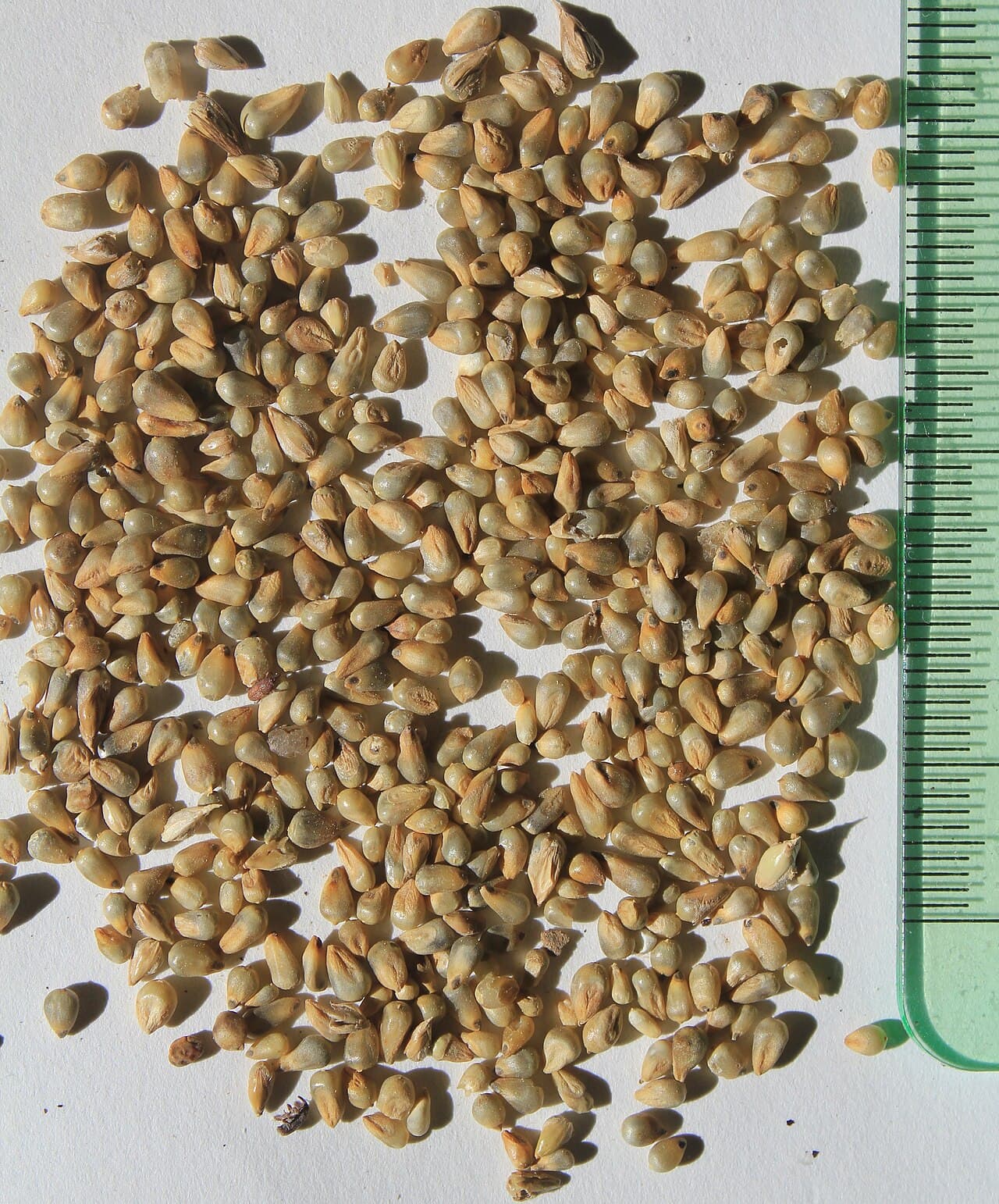
The Shree Anna Mission is India's flagship national millet promotion programme, named after the Sanskrit term for millets that the government adopted as a branding umbrella alongside the broader "nutri-cereals" framing. A year into its ₹600 crore Union Budget 2025–26 allocation, it's worth being precise about what the mission actually funds — and how it differs from the other schemes in the millet policy landscape.
Government schemes in this space tend to blur together in press coverage, especially when they share an acronym-heavy vocabulary and a common goal of "growing the millet economy." That's unhelpful if you're trying to work out which scheme actually applies to you — a farmer-producer organisation, a processor, or a research body. This piece separates out what Shree Anna Mission funds, why it's structured the way it is, and what would count as real evidence that the money is working.
In this article (6 sections)
What the mission covers
The Shree Anna Mission's ₹600 crore allocation, announced in the Union Budget 2025–26, is directed at three stated priorities: millet research, value-chain support, and consumption promotion. A precise rupee breakdown across the three isn't publicly available in a form this article can cite, but the three-way split itself tells you something important about how the government is framing the millet opportunity — not purely as a farm-output problem, and not purely as a manufacturing problem, but as a chain that needs research, infrastructure, and demand all moving together.
That framing matters because a lot of agricultural policy money in India has historically gone almost entirely to production-side support — seed subsidies, procurement, input costs — while leaving the harder, slower-to-measure work of building consumer demand underfunded. Folding consumption promotion into the same allocation as research and value-chain support is a signal that the mission's designers understood that millets don't have a production problem so much as a demand and processing-capacity problem, at least relative to established staples like rice and wheat.
How it fits alongside PLISMBP and PMFME
The mission is implemented by the Ministry of Agriculture & Farmers Welfare, which distinguishes it from PLISMBP and PMFME (both administered by the Ministry of Food Processing Industries). Shree Anna Mission sits earlier in the value chain, closer to production and research, while PLISMBP and PMFME are specifically processing-and-manufacturing-incentive schemes. This isn't a bureaucratic technicality — it reflects a deliberate division of labour across two ministries that each own a different half of the millet supply chain.
The practical effect is that the three schemes are designed to be complementary rather than overlapping. Shree Anna Mission builds the production and awareness base — better varieties, stronger extension work, more consumer familiarity with millets as a category — that PLISMBP and PMFME-supported processing capacity then converts into commercial product. Neither half works well without the other: processing capacity built under PLISMBP is wasted if there isn't enough raw millet moving through research-backed production systems, and production growth under Shree Anna Mission stalls if there isn't processing capacity to absorb it into packaged, sellable goods.
Who each scheme is actually for
For anyone trying to figure out which scheme applies to their situation, the distinction is straightforward once you know where in the value chain you sit. A farmer-producer organisation or research institution working on millet variety development or production-side extension sits more naturally under Shree Anna Mission's remit — its funding logic is built around exactly that kind of work. A processing unit turning millet grain into a branded packaged product, on the other hand, is PLISMBP or PMFME territory, since those schemes are structured as manufacturing-and-branding incentives rather than production support.
This matters in practice because applying to the wrong scheme, or assuming a single application covers both production and processing needs, wastes time an applicant doesn't need to lose. A business or institution that spans both ends of the chain — say, an FPO that also runs a small processing line — may genuinely have a case to look at more than one scheme, but should go in understanding that each one is evaluating a different kind of activity against different criteria.
The consumption-promotion piece
The "consumption promotion" priority is the least capital-intensive and hardest to measure of the mission's three stated aims, but it's arguably the piece most directly connected to whether the rest of the millet policy push pays off commercially. Government canteen and institutional-procurement millet inclusion, public awareness campaigns, and nutrition-programme integration — such as incorporating millets into school meal and anganwadi programmes — fall under this category.
This is work that doesn't show up in a processing-capacity or export-volume metric, which makes it easy to overlook when judging whether the mission is "working." But it's the piece that shapes underlying consumer demand over a longer horizon, and demand is the constraint that ultimately determines whether processing capacity built under PLISMBP gets used at all. A processing line funded and built but not matched by growing consumer appetite for millet products is a stranded asset — which is exactly why consumption promotion, unglamorous as it sounds, sits in the same budget line as research and infrastructure rather than being treated as a separate, lower-priority add-on.
What to watch going forward
For anyone tracking the mission's effectiveness rather than just its existence, the more informative signals are: whether state-level implementation — agriculture departments actually executing research and extension programmes funded under the mission — is keeping pace with the central allocation, and whether the domestic consumption growth needed to sustain processing-capacity investment under PLISMBP is actually materialising.
A well-funded mission with weak state-level execution, or one that succeeds at production-side goals without moving consumer demand, would fall short of its stated purpose even with the headline allocation fully spent. Neither of those failure modes shows up in a simple "was the money allocated" check — they only show up if you track execution and demand separately from the budget figure itself. That's the more useful lens for anyone in the industry deciding how much weight to put on the mission when planning their own investment.
Frequently asked questions
How much funding did the Shree Anna Mission receive in the Union Budget 2025–26?
₹600 crore, announced 1 February 2025 by the Finance Minister.
Which ministry runs the Shree Anna Mission?
The Ministry of Agriculture & Farmers Welfare — distinct from PLISMBP and PMFME, which are run by the Ministry of Food Processing Industries.
Is Shree Anna Mission the same as PLISMBP?
No. Shree Anna Mission funds research, value-chain support, and consumption promotion at the production and awareness stage; PLISMBP is a processing-and-manufacturing incentive scheme for branded packaged millet products specifically.
Which scheme should a processing unit apply to?
PLISMBP or PMFME, since both are structured around manufacturing and branding incentives. Shree Anna Mission's funding logic is built for production-side and research work, not processing-line investment.
References (3 sources)
- Union Budget 2025–26 documents — The ₹600 crore allocation for the Shree Anna Mission.
- Ministry of Agriculture & Farmers Welfare scheme materials — The mission's three stated priorities — research, value chain, and consumption promotion.
- PIB releases on Shree Anna Mission — Implementation updates and state-level rollout announcements.
Continue reading
Scheme deep-dive
PLISMBP — India's Millet PLI Scheme
The processing-incentive scheme Shree Anna Mission feeds into.
Scheme deep-dive
PMFME Credit-Linked Subsidy
The other processing-side scheme Shree Anna Mission complements.
Industry
2023 International Year of Millets, Two Years Later
The policy window that shaped this mission.