2023 International Year of Millets: What Changed, Two Years Later
A UN-declared year of attention doesn't rebuild a supply chain on its own. What actually moved for India's millet economy, and what's still catching up.
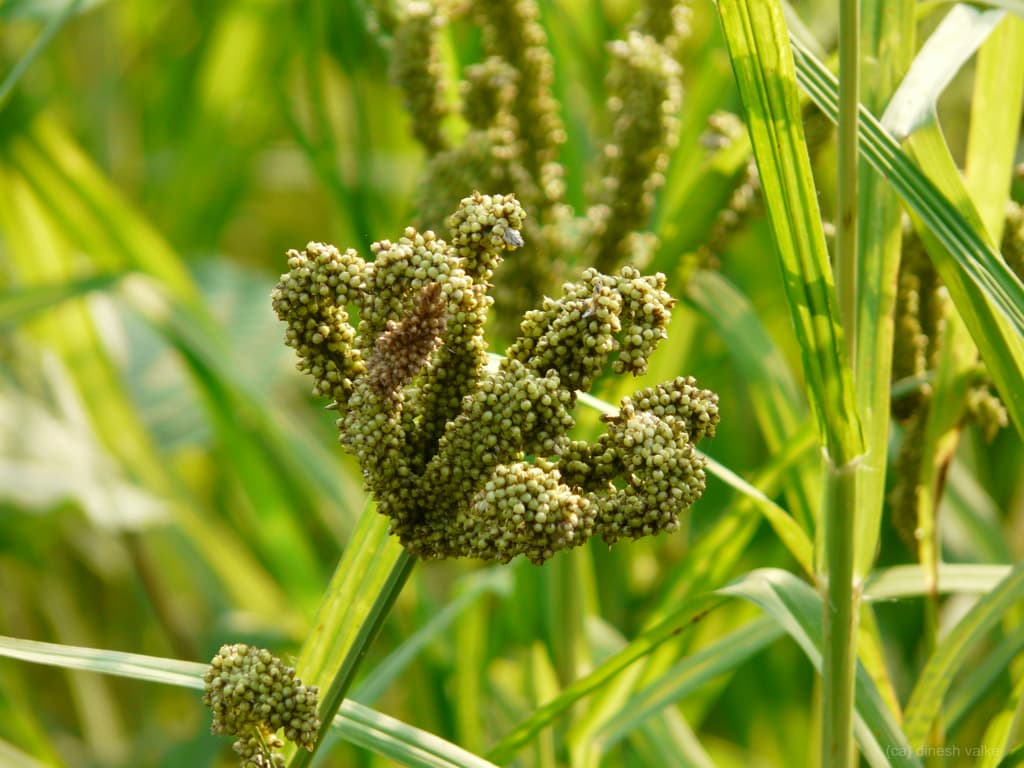
The United Nations General Assembly declared 2023 the International Year of Millets, acting on a resolution India proposed and brought forward in 2021. The goal was straightforward: raise awareness of millets' nutritional, agronomic, and climate-resilience value, and pull policy and investment attention toward a crop category that had been quietly losing cultivated area to rice and wheat for decades.
Two years on, it's worth asking what a UN-declared "year of" actually buys a crop category in practice. Some of the attention IYM 2023 generated turned into durable, measurable change. Some of it hasn't — and knowing which is which matters more for anyone building a business in this space than repeating the original press-release optimism.
In this article (7 sections)
What the declaration actually asked for
A UN "International Year of X" designation doesn't come with its own budget or enforcement power. Its real job is to focus global attention and give governments a reason to act on a topic they might otherwise keep deprioritising. For millets, the ask was specific: raise the profile of their nutritional value, their suitability for low-water and marginal-land farming, and their fit with climate-resilient agriculture — and use that profile to unlock policy and investment that hadn't been forthcoming before.
That's a real thing a UN designation can do. It's worth being just as clear about what it can't do on its own. A declaration doesn't rebuild a processing supply chain, and it doesn't reverse decades of consumer habit by itself. What it can do is open a window during which governments, brands, and investors have a fresh reason to move. The two years since 2023 are best read as a report on how much of that window actually got used.
The policy infrastructure it helped build
This is where IYM 2023 has the clearest, most concrete results. The Shree Anna Mission, PLISMBP (the millet processing PLI scheme), and an FSSAI-wide quality standard for millets all either launched or were substantially shaped during the IYM 2023 window. None of these are symbolic gestures. PLISMBP alone has approved dozens of processing entities with real capital commitments behind them — money actually being spent on plant, equipment, and capacity, not just announcements. The FSSAI Group Standard matters in a quieter but equally practical way: it gives the whole category a consistent quality baseline that simply didn't exist before, which makes it easier for buyers, retailers, and export markets to trust a "millet" label without checking every supplier individually.
It's fair to note this policy work was already underway before 2023 — the UN declaration didn't invent it from nothing. What it did was give that groundwork a louder platform and, in most accounts, a faster timeline.
Global demand grew alongside the policy push
Market research estimates put the global millet market in the low-to-mid teens of billions of dollars as of 2025, with most forecasts pointing to continued growth through the early 2030s. Two forces are driving that: broader consumer demand for gluten-free and nutritionally dense grains, running alongside the direct policy push that IYM 2023 helped trigger. Those two drivers reinforce each other — policy attention makes it easier for brands to launch millet products, and consumer demand gives those brands a reason to keep investing.
India's position in this growth story is straightforward: the country accounts for more than 40% of global millet production, making it the natural first beneficiary of rising global demand. That's an opportunity, not a guarantee — capturing it depends on whether India's supply chain, from farm to processed, packaged product, can actually scale to meet buyers now looking for millet-based options.
Brand-side interest, real but still early
Before 2023, millet-based products were mostly confined to health-food specialty channels — a narrow shelf, a narrow buyer. Since then, mainstream food brands have started entering millet-based product lines in categories like extruded snacks, breakfast cereals, and bakery goods. That's a genuinely new phenomenon, not a continuation of an existing trend, and it's one of the clearest signs that IYM 2023 shifted how large FMCG players think about the category.
It's worth being honest that not every 2023-era announcement has held up. Some brand launches and state government initiatives from that window haven't translated into sustained shelf space or ongoing budget allocation — a normal pattern for any policy-driven category push, where early enthusiasm is cheap and follow-through is not. That doesn't erase the genuine progress; it just means the brand-side story should be read as "real but still early," not as a completed shift.
The processing gap that hasn't closed
The clearest place where momentum has outpaced infrastructure is processing capacity. Policy support and brand-side interest have both moved faster than the buildout of mid-scale processing plants in many production regions. A large share of India's millet processing capacity is still sitting at the village or small-commercial tier — undercapitalised relative to the demand signal the last two years have created. That's a gap with a direct commercial implication: buyers and brands who want consistent, scaled supply of processed millet may find willing farmers and growing demand, but not yet enough mid-scale processing capacity to reliably connect the two.
There's a second, slower-moving gap behind this one. Millets lost cultivated area to rice and wheat over decades — driven partly by the Green Revolution's focus on those two crops, and partly by a longer shift in consumer preference. Reversing that is a multi-year structural project, not something a single year of global attention was ever going to complete on its own.
The honest scorecard, two years on
IYM 2023 succeeded at what it was actually designed to do: put millets on the policy and investment agenda in a way they hadn't been before, and hand the sector a concrete set of schemes and standards to build on. It didn't — and was never going to — single-handedly rebuild a processing and distribution supply chain that took decades to erode. That was never a realistic bar for a one-year UN designation to clear.
The more useful question for anyone in the sector now isn't "did IYM 2023 work." It's "which of the infrastructure it helped catalyse is durable enough to keep compounding without the spotlight." Policy schemes and quality standards look durable — they're now embedded in how the industry operates. Processing capacity and consumer habit are still catching up, and that gap is exactly where the next few years of the millet economy will actually be decided.
Frequently asked questions
Who proposed the International Year of Millets to the UN?
India brought the proposal to the UN General Assembly, which adopted the resolution in March 2021 declaring 2023 the International Year of Millets.
Did the International Year of Millets create new government schemes?
It coincided with, and helped drive the shaping of, the Shree Anna Mission, PLISMBP, and the FSSAI Group Standard for Millets — though these built on policy work already underway rather than being created purely because of the UN declaration.
Is the growth in millet demand since 2023 sustainable?
Market research firms generally project continued growth through the early 2030s, but forecasts vary meaningfully between sources — treat any single growth figure as an estimate, not a guarantee.
How big is the global millet market now?
Market research places it in the low-to-mid teens of billions of dollars as of 2025, with India — producer of more than 40% of the world's millet — positioned as the main beneficiary of continued growth, assuming its supply chain can keep pace.
References (2 sources)
- UN General Assembly resolution on the International Year of Millets (2021) — The resolution that designated 2023 as the International Year of Millets.
- Market-size estimates aggregated from multiple industry research firms (IMARC, Mordor Intelligence, and others) — Treated as industry estimates, not verified primary data, and flagged as such in the article.
Continue reading