Sourcing Millets from India: A Guide for International Buyers
India supplies over 40% of the world's millets. What an international buyer actually needs to verify before placing an order.
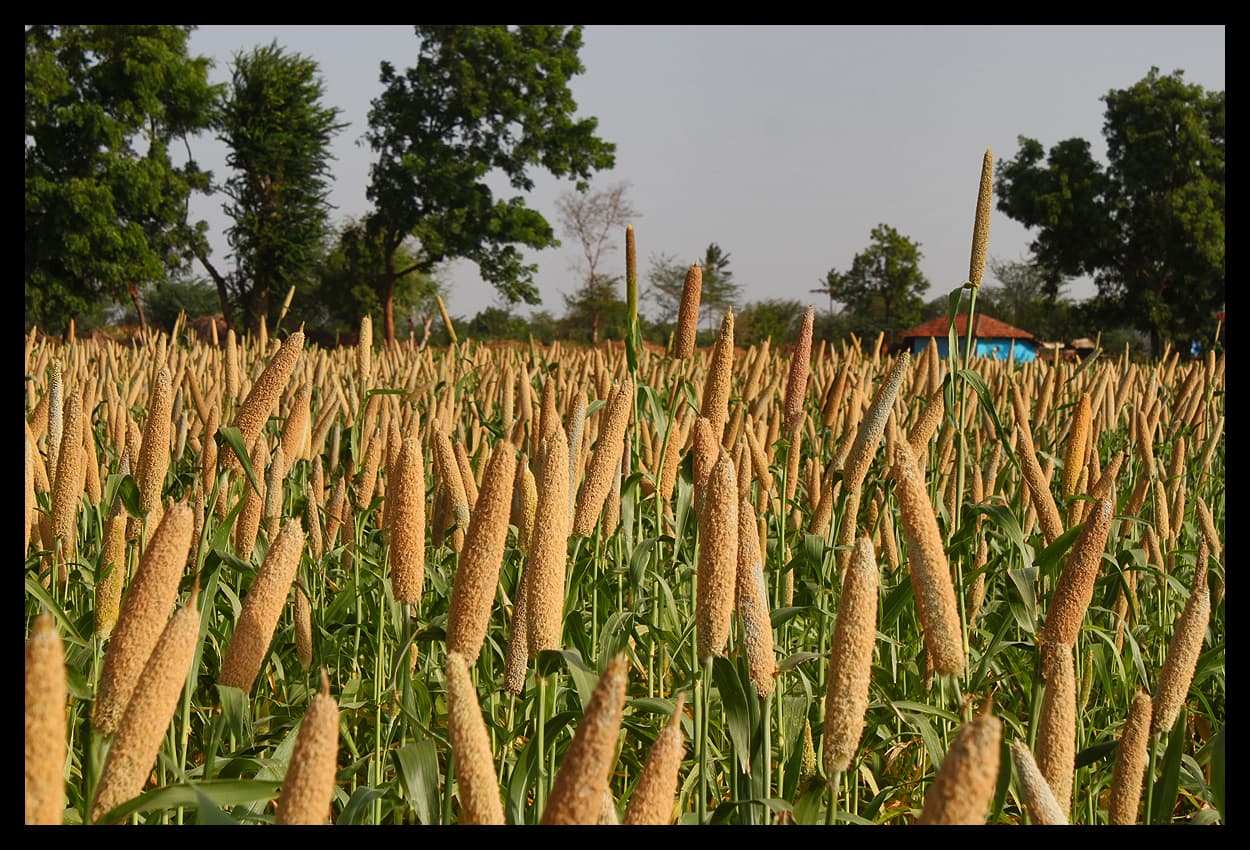
India is the world's largest millet producer, supplying an estimated 40%+ of global output. For international buyers new to the category, the practical challenge isn't finding a supplier — it's verifying that the one you find is who and what they claim to be.
That distinction matters because India's scale as a producer says nothing about any single exporter's legitimacy. A country supplying 40%+ of a global crop has thousands of players at every level of formality, from fully licensed exporters with years of documented shipping history to informal traders who may never have completed an export transaction. The gap between "India grows a lot of millet" and "this specific supplier can reliably deliver a compliant shipment to my country" is exactly where due diligence has to happen. This guide walks through the checks that close that gap, in the order a first-time buyer should actually do them.
In this article (6 sections)
Start with registration, not price
The single most useful filter for a first-time buyer is APEDA registration. Millets fall under APEDA's (Agricultural and Processed Food Products Export Development Authority) Schedule-2 agricultural products, meaning legitimate Indian exporters must hold a current APEDA Registration-Cum-Membership Certificate (RCMC). A supplier who can't produce one, or whose registration doesn't match the entity name on your contract, is a hard stop — not a negotiating point.
It's worth being explicit about why this comes before price, not after. A quoted price from an unregistered or misrepresented entity isn't actually comparable to a quote from a properly registered exporter — you're not choosing between two versions of the same transaction, you're choosing between a real export contract and one that may not clear customs, may not be enforceable, or may involve an entity that isn't who it claims to be. Sorting suppliers by registration status first, then comparing price among the ones that pass, is the only sequence that produces a genuinely comparable shortlist.
The FSSAI and organic-certification layer
Beyond APEDA, check for a Central FSSAI license — required specifically for export-oriented food business operators, and distinct from the state licenses that cover domestic-only production. A supplier who only holds a state license may be entirely legitimate for the Indian domestic market while still being unable to lawfully export to you; this is a common point of confusion for first-time buyers who see "FSSAI licensed" on a supplier profile and assume it automatically covers export.
Where organic certification is claimed, the relevant mark depends on your own market, not the supplier's: India Organic/NPOP, USDA NOP for the US, EU Organic (Regulation 2018/848) for Europe, or JAS for Japan. These schemes don't automatically recognise each other — a supplier holding India's domestic organic certification hasn't necessarily met the bar your own country's regulator requires, and importing organic-labelled product without the certification your market actually recognises can create a compliance problem on arrival, not just a marketing one.
Know your HS codes
Millet trade documentation runs through a small set of HS codes under heading 1008 (buckwheat, millet, and canary seed):
| HS code | Covers |
|---|---|
| 1008 20 | Millet, seed (general heading) |
| 1008 29 20 | Pearl millet (bajra), machine-cleaned |
| 1102 90 90 | Millet flour (other cereal flours) |
Confirm the HS code on your supplier's export documentation matches the actual product form you're buying — whole grain and flour move under different codes, and a mismatch can hold up customs clearance on arrival. This is a paperwork detail that's easy to treat as an afterthought during price negotiation, but it becomes a real operational problem the moment a shipment sits at a port while documentation gets corrected. Checking the HS code against the physical product form before the contract is signed costs nothing; fixing it after the shipment has left India costs time, storage fees, and sometimes the relationship with the buyer waiting on the other end.
What "verified" should actually mean
A supplier profile marked "verified" on a directory or marketplace is only as good as what was actually checked. At minimum, ask any prospective supplier to share: their APEDA RCMC, their FSSAI license number (verifiable via FoSCoS, FSSAI's public licensing portal), and — if quality claims are being made — evidence of testing against FSSAI's Group Standard for Millets, which sets maximum limits across eight quality parameters including moisture, extraneous matter, and defect rates.
Treat "verified" as a starting point for your own check, not a substitute for it. A directory badge tells you a supplier passed whatever criteria that platform applied — it doesn't tell you whether those criteria match what actually matters for your specific order, your specific market's import requirements, or the specific quality parameters your end customer expects. Independently confirming the RCMC and FSSAI number through FoSCoS takes a few minutes and removes any ambiguity about whether documentation shared with you is current and genuine.
Sample before you commit to volume
This is standard practice in any grain trade, but worth stating plainly for buyers new to the millet category specifically: request and independently test a sample lot before committing to a full shipment, particularly for a first order with a new supplier. Millet quality varies meaningfully by variety, harvest season, and storage handling in ways that aren't always visible from documentation alone.
A supplier can hold every certification described above and still deliver a lot that doesn't match your expectations on moisture content, foreign matter, or grain uniformity — certifications establish that a supplier operates within a compliance framework, not that any individual shipment will meet your specific quality bar. Independent sample testing is the step that catches variation between lots, harvest seasons, and storage conditions that paperwork alone can't reveal. For a first order especially, the cost of testing a sample is small next to the cost of a full container that doesn't meet spec on arrival.
Frequently asked questions
What percentage of global millet production does India supply?
Over 40%, making India the world's largest millet producer by a substantial margin.
What certification should I ask an Indian millet exporter for first?
APEDA registration (RCMC) is the baseline check — it's legally required for exporting millets from India, and a supplier without one is not operating through legitimate export channels.
Do organic certifications from India transfer automatically to my market?
No. India Organic/NPOP certification doesn't automatically satisfy USDA NOP (US), EU Organic, or JAS (Japan) requirements — check which certification your specific market requires and confirm the supplier holds it, not just an Indian domestic organic mark.
Does an FSSAI license automatically cover export?
Not always. Export-oriented food business operators need a Central FSSAI license; a state-level license may cover domestic sales only, so check which one a supplier actually holds before assuming they can legally export to you.
References (3 sources)
- APEDA Schedule-2 agricultural products list — Confirms millets' status as a Scheduled Product requiring APEDA registration to export.
- Indian Customs HS classification schedule — HS codes cited for millet grain and processed millet product exports.
- FSSAI FoSCoS licensing portal — Central License requirement for export-oriented units.
Continue reading