FSSAI's Group Standard for Millets: What Processors Need to Know
One standard, 15 millet types, 8 quality parameters — in force since September 2023. What it checks, and where lots most commonly fail.
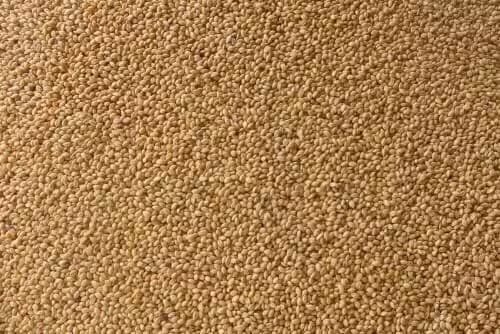
Since September 2023, every millet sold in India's formal food supply chain has had to meet a single comprehensive quality standard. Before this, millets were regulated less consistently than staples like rice and wheat — a gap that mattered less when millets were a niche product, and mattered a lot more once the government began pushing them into mainstream retail and export channels.
For processors and exporters, understanding what the standard actually checks — and where lots most commonly fail — matters more than simply knowing it exists. A standard you can't explain to a buyer isn't doing its job for you commercially, even if you're technically compliant.
This guide covers what the Group Standard requires, why it exists in this particular form, the eight quality parameters it measures, where processors most often fall short, and what compliance does and doesn't mean for buyers and exporters.
In this article (6 sections)
What the standard actually covers
The Food Safety and Standards Authority of India (FSSAI) specified a comprehensive group standard covering 15 types of millet — including pearl millet, sorghum, finger millet, foxtail millet, kodo millet, little millet, barnyard millet, proso millet, and several minor grains beyond India's core nine — under the Food Safety and Standards (Food Products Standards and Food Additives) Second Amendment Regulations, 2023.
Grouping 15 grains under one regulation, rather than issuing a separate standard for each, was a deliberate simplification. It fixes maximum limits across 8 quality parameters and has been enforced since 1 September 2023. For a processor handling more than one millet variety, that means a single reference framework to test and document against, rather than a different rulebook per crop — a meaningful reduction in compliance overhead for anyone running a multi-crop line.
Why one standard for 15 grains, and why now
Before 2023, millets were regulated more inconsistently than major cereals like rice and wheat, in part because they'd historically been a smaller share of the formal packaged-food market. Regulation tends to lag commercial relevance, and millets simply hadn't been commercially significant enough, for long enough, to justify the same rigor applied to staple grains.
That changed with the 2022 UN declaration of 2023 as the International Year of Millets — following a proposal India brought to the General Assembly. The declaration accelerated the push for a standardised quality framework that could support both domestic retail confidence and export credibility at the same time. A country promoting millets internationally needs a domestic quality baseline that export buyers can actually trust; without one, "India is the world's largest millet producer" is a production statistic, not a quality guarantee. The Group Standard is the regulatory piece that closes that gap.
The eight quality parameters, and why each one exists
FSSAI's standard sets maximum limits for eight things, and each maps to a real risk in the supply chain rather than being an arbitrary checkbox:
- Moisture content — excess moisture accelerates spoilage and fungal risk during storage.
- Uric acid content — an indicator of insect infestation history in the lot.
- Extraneous matter — non-grain material (stones, chaff, dust) that should have been removed during cleaning.
- Other edible grains — cross-contamination from other cereals in the same lot.
- Defects — damaged, discoloured, or otherwise substandard individual grains.
- Weevilled grains — grains damaged by live insect activity.
- Immature grains — grains harvested or processed before full maturity.
- Shrivelled grains — underdeveloped grains that reduce both yield and visual quality.
Read together, these eight parameters cover the full lifecycle of a lot's quality risk: how it was grown and harvested (immature, shrivelled grains), how it was stored (moisture, uric acid, weevilled grains), and how carefully it was cleaned and sorted (extraneous matter, other edible grains, defects). A processor who understands that grouping can trace a failed parameter back to the specific stage of their operation that needs fixing, rather than treating a test failure as a mystery.
Where lots most commonly fail
In practice, the parameters that most often trip up smaller processors are moisture content, from inadequate drying before storage, and extraneous matter, from under-specified cleaning equipment at the primary processing stage. Both failure modes trace back to the earliest, cheapest stages of processing — which is exactly why they're common: it's tempting to under-invest in drying time and cleaning capacity when the equipment further down the line (de-huskers, graders) gets more attention as the "real" processing step.
The reassuring part is that both are addressable with process discipline rather than expensive equipment upgrades — proper drying time before bagging, and a cleaner/destoner stage sized correctly for your throughput. Neither requires a large capital outlay; both require treating the early stages of the line as seriously as the later ones. For a processor auditing their own compliance risk, moisture and extraneous matter are the two parameters worth checking first, since they're both the most common failure points and the cheapest to fix.
What this means for buyers and exporters
For B2B buyers, a supplier's ability to consistently meet the Group Standard is now a reasonable baseline quality signal. It doesn't replace direct quality verification — a buyer should still check actual test results, not just take compliance on faith — but a processor unable to explain how they test against these eight parameters is a meaningful red flag. Asking a supplier to walk through their moisture and extraneous-matter numbers specifically is a fast way to separate genuinely compliant operations from ones that simply claim to be.
For exporters specifically, meeting the Group Standard domestically doesn't automatically satisfy destination-market requirements — the EU, US, and other markets layer their own import standards on top. It is, however, the necessary starting point: an exporter who can't demonstrate domestic compliance has little basis for claiming they meet a stricter foreign standard. Treat FSSAI compliance as the floor for export-readiness, not the ceiling.
Frequently asked questions
Which millets does the FSSAI Group Standard cover?
15 types, including all nine millets India cultivates at scale (pearl millet, sorghum, finger millet, foxtail millet, kodo millet, little millet, barnyard millet, proso millet, browntop millet) plus additional minor grains such as amaranthus and buckwheat.
When did the FSSAI Group Standard for Millets come into force?
1 September 2023, under the Food Safety and Standards (Food Products Standards and Food Additives) Second Amendment Regulations, 2023.
What are the eight quality parameters FSSAI checks for?
Moisture content, uric acid content, extraneous matter, other edible grains, defects, weevilled grains, immature grains, and shrivelled grains — each with a fixed maximum limit.
Does meeting the FSSAI standard mean a millet lot is export-ready?
It's the necessary domestic baseline, but export destinations typically layer their own additional requirements on top — meeting FSSAI's standard alone doesn't guarantee compliance with, say, EU or US import requirements.
References (2 sources)
- PIB press release, "FSSAI specifies comprehensive group standard for millets" (February 2023) — Announcement of the Group Standard and its scope across 15 millet and grain types.
- Food Safety and Standards (Food Products Standards and Food Additives) Second Amendment Regulations, 2023 — The binding regulation setting the 8 quality parameters covered by the standard.
Continue reading