De-Husking Equipment for Millets: A Buyer's Guide
The de-husker is the one machine every millet line needs — and the one most first-time buyers under-spec. Husk hardness varies by crop; here's what to check.
Of every machine on a primary processing line, the de-husker does the most to decide whether a unit runs profitably or fights its own equipment every shift. Get the spec wrong and you don't just lose a bit of speed — you lose grain, every single batch, for as long as the machine is in service.
Millets aren't uniform in how hard they are to husk. A machine built for one crop can be the wrong choice for another, even though both are "millets" on paper. This guide walks through what actually determines the right spec: husk hardness, single-stage versus double-stage design, the checklist that predicts total cost of ownership, and where the de-husker fits in the rest of your line.
None of this is about chasing the cheapest machine or the highest throughput number on a spec sheet. It's about matching the equipment to your actual crop mix and actual volume — because a mismatch here shows up as lost yield for years, not just a bad first quarter.
In this article (6 sections)
Husk hardness varies by crop — spec accordingly
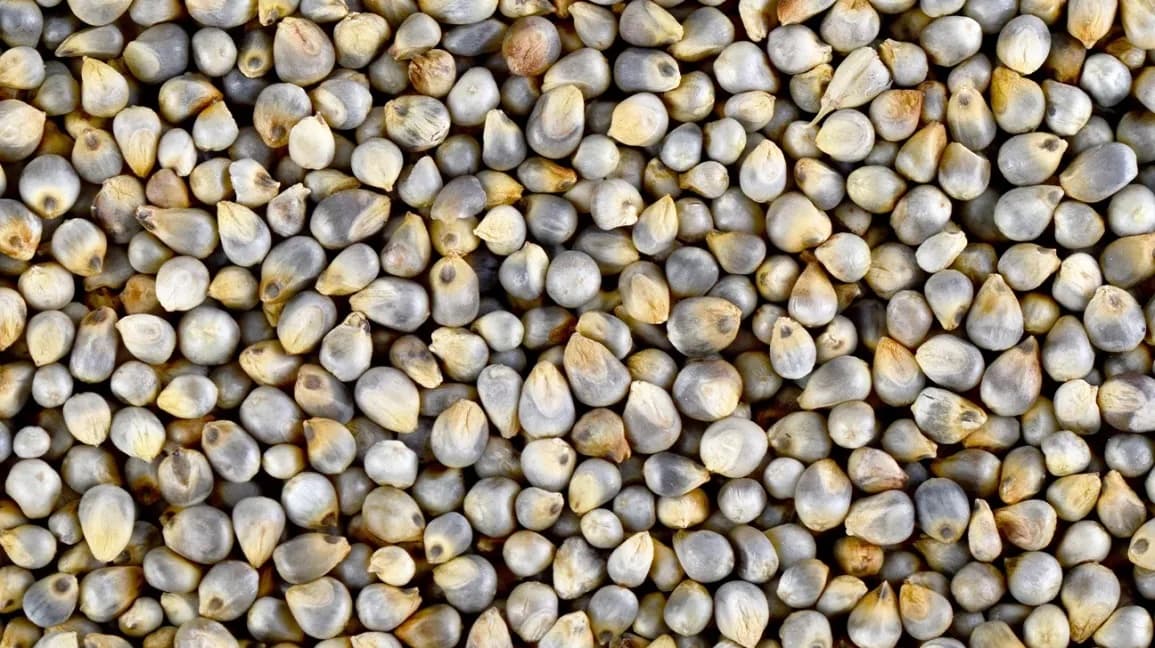
Not all nine millets de-husk the same way. Bajra (pearl millet) has a comparatively harder husk and generally needs more aggressive de-husking than finger millet (ragi) or kodo millet, which are gentler on equipment. That difference isn't cosmetic — it's the reason a single fixed setting can't serve every crop equally well.
A de-husker specified and tuned for bajra will often over-process — and needlessly break — softer grains like little millet or barnyard millet. Every broken grain is grain you can't sell at full value, so this isn't a minor efficiency issue; it's a direct hit to your realized yield on every batch of the softer crop that runs through a bajra-tuned machine.
If your unit will process more than one crop, you have two honest options: plan for a machine with adjustable settings, or accept that a single fixed configuration will be a compromise on at least one of your crops. Deciding this before you buy, rather than discovering it after your first mixed-crop run, is the difference between a planned trade-off and an expensive surprise.
Single-stage vs double-stage units
Single-stage de-huskers handle one pass and suit lower-volume, single-crop operations — typically the village and small-commercial tiers, where capital is tighter and crop variety is usually narrower. They're simpler machines, with a lower upfront cost and a smaller footprint, which is exactly what a smaller operation needs.
Double-stage units run grain through two de-husking passes, improving yield and reducing breakage. They're common at the mid-commercial tier and above, particularly for harder-husked crops like bajra, where a single aggressive pass would cause excessive breakage. The second pass essentially lets the machine be gentler at each stage while still fully removing the husk — a trade of extra capex and floor space for better realized yield.
Which one makes sense for you comes down to your crop mix and your volume, not just your budget. A double-stage unit costs more, but if you're running high volumes of a hard-husked crop, the yield it protects can outweigh that extra cost fairly quickly. A single-stage unit is the right call if you're smaller, single-crop, and don't need the extra yield protection badly enough to justify the added cost and complexity.
The checklist that predicts total cost of ownership
A handful of specs matter far more than the headline throughput number a vendor leads with:
- Throughput match to your tier. A de-husker rated well above your actual capacity tier is wasted capital sitting idle; one rated below it becomes your daily bottleneck. Match the rated throughput to your overall line capacity, not just your current volume.
- Adjustability. If you'll process more than one millet variety, confirm the machine has adjustable clearance or pressure settings rather than a fixed configuration built for one grain.
- Breakage rate, not just throughput. Vendor throughput claims rarely mention breakage rate under real conditions. Ask for it specifically, and if possible, test with your own grain before committing — breakage directly reduces your yield and therefore your realized margin.
- Downstream compatibility. Confirm the de-husker's output feeds cleanly into your grader or aspirator stage without needing an intermediate manual handling step, which adds labour cost and contamination risk.
- After-sales support and spares. De-huskers have wear parts — rollers, screens — that need periodic replacement. A cheaper machine from a vendor without accessible spares and service in your region often costs more over its operating life than a slightly pricier one with local support.
Where de-huskers fit in the line
A de-husker doesn't operate in isolation. It sits between the pre-cleaner/destoner stage and the final grading/aspiration stage, receiving grain that's already had stones and coarse debris removed, and handing off husked grain that still needs sorting and polishing before it's sale-ready.
Buying a de-husker in isolation, without confirming compatibility with the rest of your planned line, is a common first-time-buyer mistake. A de-husker that outpaces your grader creates a bottleneck downstream; one that underperforms starves your grader of material and leaves it running under capacity. Either way, the mismatch shows up as wasted capital somewhere on the line — just not necessarily where you first put your money. See the capacity tier guide for how the full equipment stack fits together at each scale.
Comparing vendors on the numbers that actually matter
Two vendors quoting the same throughput figure can deliver very different real-world results, because throughput alone says nothing about breakage rate, adjustability, or how the machine handles your specific grain. A generic spec sheet is a starting point for a shortlist, not a basis for a purchase decision.
The more useful comparison is a like-for-like test: the same grain, run through each candidate machine, with breakage rate and actual throughput measured rather than quoted. That's a bit more work upfront, but it's cheap relative to running the wrong machine for years. It's also the only way to catch a machine that hits its throughput number by simply being less careful with the grain — a trade a spec sheet will never disclose on its own.
Frequently asked questions
Do I need a different de-husker for each millet variety?
Not necessarily a different machine, but you do need one with adjustable settings if you're processing crops with meaningfully different husk hardness — bajra alongside ragi or kodo, for example.
What's the difference between single-stage and double-stage de-huskers?
Single-stage units run grain through one de-husking pass; double-stage units run two, generally improving yield and reducing breakage, at a higher capex and footprint cost.
How do I compare de-husker vendors fairly?
Ask each vendor for throughput and breakage-rate figures under your specific grain type, not generic specifications — breakage rate varies significantly by crop and directly affects your realized yield.
Where does the de-husker sit in a processing line?
Between the pre-cleaner/destoner stage and the final grading/aspiration stage. Confirming that the de-husker's output and capacity match both neighbouring stages is essential before you buy — it's not a machine you can evaluate in isolation.
References (2 sources)
- IndiaMillets vendor-quote survey, 2026 — Indicative equipment pricing across de-husker types and capacities.
- ICAR-Indian Institute of Millets Research equipment guidance notes — Husk-hardness and de-husking mechanism guidance by crop.
Continue reading