Foxtail Millet (Kangni) in India: Cultivation and Nutrition
One of the earliest cereals domesticated in Asia — where foxtail millet (kangni) is grown in India, its protein-rich profile, and how it's processed.
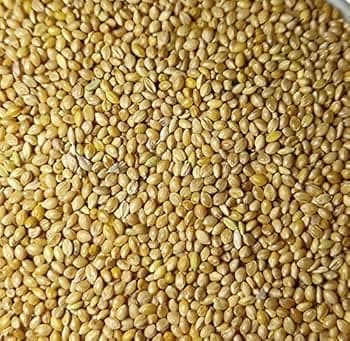
Foxtail millet is one of the earliest cereals domesticated anywhere in Asia, and today one of India's most widely grown minor millets — a short-duration crop that fits neatly into dryland rotation systems across the southern peninsula.
In this article (6 sections)
At a glance
| Metric | Figure |
|---|---|
| Botanical name | Setaria italica |
| Local names | Kangni (Hindi), Korra (Telugu), Thinai (Tamil), Navane (Kannada) |
| Top producing states | Andhra Pradesh, Karnataka, Tamil Nadu, Maharashtra |
| Crop duration | Roughly 75–90 days |
| Protein content | Among the higher-protein millets, approx. 12 g / 100 g |
Source: State agriculture department crop profiles; ICAR-Indian Institute of Millets Research (agronomy and nutrition context).
Where it's grown
Foxtail millet is concentrated in Andhra Pradesh and Karnataka, with meaningful cultivation in Tamil Nadu and Maharashtra. It's grown mainly as a rainfed dryland crop, valued for maturing faster than most other cereals — a trait that lets farmers fit it into tight crop rotations or use it as a reliable fallback when the monsoon is short.
Cultivation
As a short-duration C4 crop, foxtail millet tolerates moisture stress well and performs reliably on marginal soils where longer-duration cereals would fail. Its quick turnaround (as little as 75 days for some varieties) makes it a common rotation partner with pulses and oilseeds.
Nutrition profile
Foxtail millet carries one of the higher protein contents among the millets — comparable to or exceeding wheat — along with meaningful dietary fibre and a relatively low glycaemic index, a profile that has made it a frequent ingredient in diabetic-friendly and weight-management food formulations.
Processing and products
Foxtail millet is processed mainly into de-husked whole grain (used as a rice substitute) and flour. Its small, hard grain requires dedicated de-husking equipment distinct from what's used for larger-grained millets like bajra or jowar — see the de-husking equipment buyer's guide for de-husker comparisons relevant to small-grain millets.
Frequently asked questions
What is foxtail millet called in Indian languages?
Kangni in Hindi, Korra in Telugu, Thinai in Tamil, and Navane in Kannada.
Which states grow the most foxtail millet in India?
Andhra Pradesh and Karnataka are the leading producers, with significant cultivation in Tamil Nadu and Maharashtra.
How long does foxtail millet take to mature?
Roughly 75 to 90 days, making it one of the shorter-duration cereals grown in India.
References (2 sources)
- State agriculture department crop profiles (Andhra Pradesh, Karnataka) — Cultivation zones and area under foxtail millet.
- ICAR-Indian Institute of Millets Research — Agronomy, crop duration, and nutrition context.
Continue reading