Why Millets Are Gaining Ground in Modern Agriculture
Millets are gaining renewed importance amid climate change, offering low-water, low-cost farming with rising demand and government support.
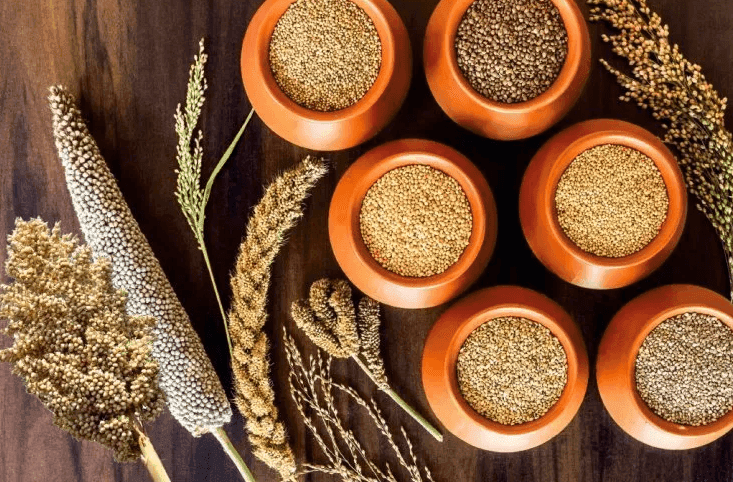
For centuries, farmers in dry, low-rainfall regions have depended on millets as a dependable crop when other staples could not survive. That reliability is now drawing fresh attention as climate change and water shortages put growing pressure on India's agricultural systems. Millets, hardy by nature, are increasingly being seen not as a fallback crop but as a strategic one — capable of thriving where rice and wheat struggle.
The renewed interest is not sentimental; it is practical. Millets need markedly less water than many major staple crops, making them well suited to rain-fed farming and drought-prone belts where irrigation infrastructure is limited or unreliable. Varieties such as bajra and jowar are known for tolerating poor or less fertile soils, conditions under which other crops would simply fail to establish.
This resilience translates directly into lower costs for farmers. Because millets need less irrigation, fewer fertilisers, and reduced pesticide use, the overall investment required for cultivation drops. Lower upfront investment means farmers carry less financial risk, even when weather turns uncertain — a meaningful consideration given how erratic monsoon patterns have become in many parts of the country.
In this article (6 sections)
Why water and soil tolerance matter so much right now
Water is the single biggest constraint on Indian farming today, and it is only getting tighter. A crop that can be grown with markedly less irrigation is not just a nice-to-have — in a drought year, it can be the difference between a harvest and a failed one. That is what makes bajra and jowar's tolerance for poor or less fertile soils so significant: these are not niche traits for a handful of specialist growers, they are exactly the conditions that define large stretches of India's rain-fed farmland. A crop bred by generations of selection to survive there has a natural advantage over rice or wheat, which were never suited to those regions in the first place and rely on irrigation to make up the difference. For a farmer without reliable access to irrigation, that gap is not academic — it is the reason millets stayed in cultivation in dry regions long after other staples took over the more water-rich parts of the country.
Lower inputs, lower risk — why that matters more in bad years
Every rupee a farmer spends on irrigation, fertiliser or pesticide before harvest is a rupee at risk if the crop fails. Because millets need less of all three, the total exposure is smaller from the start — so a bad monsoon or a pest year does less financial damage than it would to a more input-heavy crop. This is a genuinely different kind of value than yield alone: a crop does not have to out-produce rice or wheat to be a rational choice if it consistently costs less to grow and carries less downside risk. For smallholders operating on thin margins, that risk reduction can matter as much as the price the crop eventually fetches, since a single bad season on a high-input crop can wipe out several years of savings in a way a lower-input millet crop generally does not.
A short crop cycle with long-term value
One of the most practical advantages of millets is speed. Most millet varieties mature within three to four months, allowing farmers to complete a harvest quickly and, where feasible, fit millet cultivation between other crop cycles. This flexibility gives farmers an additional planting window without disrupting their primary cropping calendar, effectively adding a second layer of income potential from the same land within a single agricultural year. A shorter cycle also means less time exposed to whatever the season throws at the crop — pests, an erratic spell of rain, or a heat wave — simply because there is less calendar time in which something can go wrong.
Crops such as ragi, known for their nutritional density, fit into this same pattern of quick turnaround and low input dependency, reinforcing why millets are increasingly viewed as a practical addition to cropping systems rather than a niche or legacy grain.
Rising demand and policy support
Demand for millets has been climbing as consumers become more aware of their nutritional value and health benefits. That shift in consumption patterns is being reinforced by government initiatives and awareness campaigns aimed at encouraging millet uptake across the country. Together, these forces are creating a more favourable economic environment for farmers who choose to grow millets, supported further by mechanisms such as minimum support price coverage and processing-linked government schemes that aim to strengthen the value chain from farm to market. A crop that is cheap to grow is a good start, but it only becomes a good livelihood choice once there is somewhere to reliably sell it — which is why the demand side and the policy side of this story matter just as much as the agronomy.
What this means for farmers, processors and buyers
Put together, these factors do more than make millets easier to grow — they change the calculation for everyone connected to the crop. For a farmer, lower input costs and a short cycle mean less capital tied up and less exposure per season, which is exactly the kind of risk profile that suits smallholders in unpredictable growing conditions. For processors and buyers, a crop that is becoming both easier to source and more in demand is a supply signal worth watching, particularly as scheme-linked support strengthens the infrastructure connecting farms to processing units. None of this makes millets a guaranteed win for every grower in every region, but it does explain, in concrete economic terms, why a crop long associated with subsistence farming is being taken seriously again as a mainstream cropping choice.
For farmers, the combination of lower cultivation costs, reduced financial risk, a short growing period, and rising market demand is positioning millets as both an economic opportunity and a sustainable farming choice — one that protects natural resources while offering a viable path to improved income. Buyers and processors looking to engage with this expanding sector can explore options through the supplier directory, while ongoing developments in the space continue to be tracked on the news section.
Frequently asked questions
Why are millets becoming more important in agriculture now?
Millets are gaining renewed importance because climate change and water shortages are affecting agriculture more broadly, and millets are hardy crops that can grow in difficult conditions with minimal resources, making them reliable for sustainable farming and rural livelihoods.
How do millets compare to rice or wheat in terms of water and cost?
Millets require less water than staple crops such as rice or wheat, making them suited to rain-fed agriculture and drought-prone areas. They can also grow in poor or less fertile soils, and because farmers do not need to spend heavily on irrigation, fertilisers, or pesticides, the overall cost of cultivation is lower.
How long do millets take to grow?
Most millet varieties mature within three to four months, which allows farmers to harvest quickly and, in some cases, grow millets between other crop cycles.
Is demand for millets increasing?
Yes. Demand for millets is rising as more people recognise their nutritional value and health benefits, a trend that is being reinforced by government initiatives and awareness campaigns encouraging millet consumption.
Does growing millets reduce risk for farmers, not just cost?
Yes. Because millets need less irrigation, fewer fertilisers and less pesticide, the total investment at stake in a season is smaller. If weather turns uncertain or a crop underperforms, the financial loss is generally smaller than it would be for a more input-heavy crop.