Browntop Millet (Korle) in India: Cultivation and Nutrition
India's least-cultivated millet — and the one with the highest dietary fibre content of any commonly cultivated Indian millet.
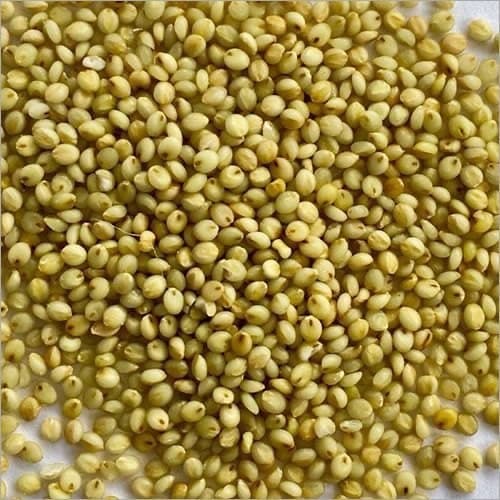
Browntop millet is the least-cultivated of India's nine officially recognised millets — for decades treated more as a hardy wild grass than a deliberate crop — but it carries the highest dietary fibre content of any commonly cultivated Indian millet, and that has driven a small but real resurgence in cultivation.
In this article (6 sections)
At a glance
| Metric | Figure |
|---|---|
| Botanical name | Urochloa ramosa (syn. Brachiaria ramosa) |
| Local name | Korle (Kannada) |
| Top producing states | Karnataka, Tamil Nadu, Maharashtra, Andhra Pradesh |
| Dietary fibre | ~12.5 g / 100 g — the highest among commonly cultivated Indian millets |
Source: Karnataka state agriculture department crop profiles; ICAR-IIMR (nutrition data).
Where it's grown
Browntop millet cultivation is concentrated in Karnataka, with pockets in Tamil Nadu, Maharashtra, and Andhra Pradesh. Karnataka's dryland belts are where most of the renewed cultivation interest has taken hold in recent years, as processors and health-food brands have sought out its fibre content specifically.
Cultivation
Browntop millet is extremely hardy and low-input, historically surviving as a semi-wild grass in dryland field margins before being brought under more deliberate cultivation. It requires minimal irrigation and tolerates poor soils, characteristics that made it easy to overlook commercially for decades even as it persisted agronomically.
Nutrition profile
Browntop millet's standout characteristic is fibre — at roughly 12.5 g per 100 g, it carries the highest dietary fibre content of any of India's commonly cultivated millets, alongside a meaningful protein and antioxidant profile. This fibre content is the primary driver of its positioning in health-food and gut-health-focused product lines.
Processing and products
Browntop millet is processed into de-husked whole grain, used as a rice substitute, and increasingly into flour for health-focused baked goods. Because commercial cultivation and processing infrastructure for browntop millet are less developed than for the other minor millets, sourcing tends to run through a smaller number of specialist processors, mainly in Karnataka.
Frequently asked questions
What is browntop millet called in Kannada?
Korle.
Why is browntop millet the least cultivated of India's nine millets?
It was historically treated as a semi-wild grass rather than a deliberately cultivated crop, and lacks the established processing infrastructure and market channels that the other millets have built up. Renewed interest in its fibre content is now driving a small resurgence in dedicated cultivation, mainly in Karnataka.
What makes browntop millet nutritionally distinctive?
Its dietary fibre content — approximately 12.5 g per 100 g — is the highest among India's commonly cultivated millets.
References (2 sources)
- Karnataka state agriculture department crop profiles — Cultivation zones and renewed-interest programmes for browntop millet.
- ICAR-Indian Institute of Millets Research — Agronomy and nutrition context.
Continue reading